Na Pali Catamaran Or Raft: Which Boat Fits You
Catamarans trade thrills for stability and shade; rafts trade comfort for speed and sea caves. Here is how the two formats actually differ on the water.
Short answer
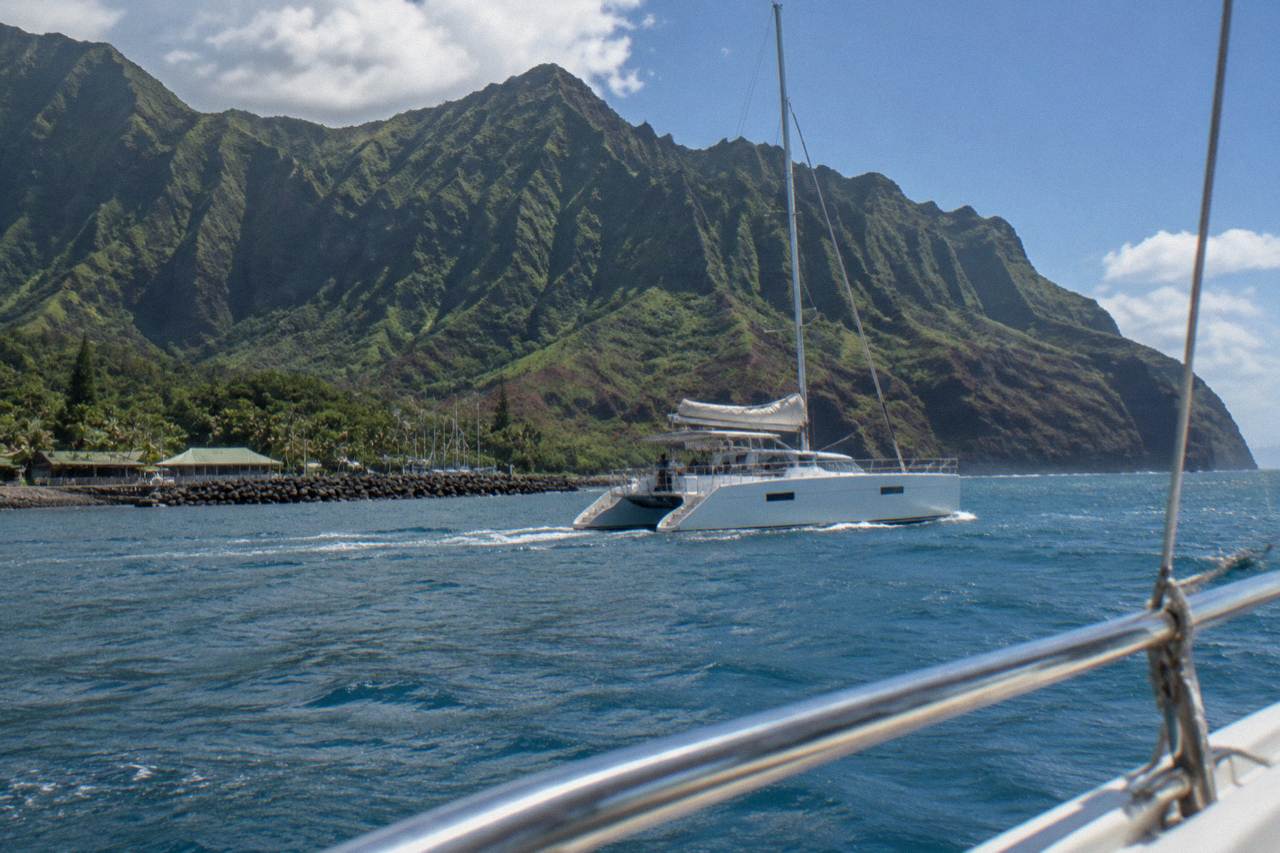
Choose a catamaran for stability, shade, food and a smoother ride in summer chop; choose a rigid raft for speed, sea caves and a smaller group. Catamaran trips on this roster run about 4 to 6 hours; raft trips run about 3 to 6 hours 30 minutes, with prices on the listings.
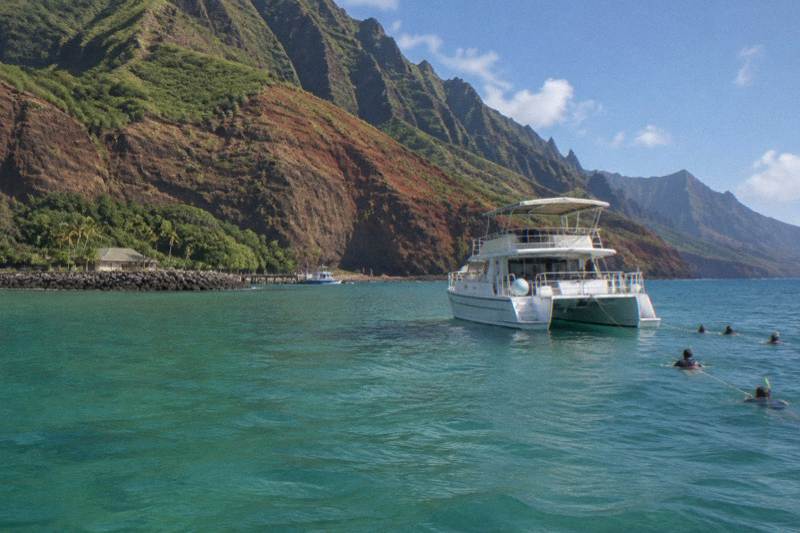
Two boat formats share the Na Pali coast, and they could hardly feel more different. A catamaran is a wide, twin-hulled sailing or power vessel with seats, shade, a marine head and usually lunch; a rigid inflatable raft is a low, fast, open boat built to tuck into sea caves and run close under the cliffs. Both depart from west and south side harbors, both cruise the same coastline, and both stop to snorkel when conditions allow. The choice between them is less about which is "better" and more about your stomach, your tolerance for spray, and how much you want to touch the caves. Whichever boat you pick, your clothing list changes with it, and the Na Pali Coast boat tour packing guide spells out the spray gear, footwear, and sun protection each format calls for.
This comparison lays out the real differences: ride quality and seasickness, the sea cave question, the season and north shore swell, what the snorkel stop adds, and what each format costs on this site's roster. A good companion read is whether a Na Pali catamaran tour is worth it, which follows the money side of the same decision.
Catamaran Or Raft: Which Na Pali Boat Should You Book?
A catamaran is the right call if you want a stable, shaded, bathroom-equipped ride with food and a big deck to walk around on; a raft is the right call if you want speed, close-up cliffs and the chance to enter sea caves, and you are comfortable with spray and a bouncier ride. Catamarans suit families, older travelers and anyone prone to motion sickness. Rafts suit confident swimmers and thrill-seekers.
The stability gap is real and physical. A catamaran's twin hulls span a wide beam, so the boat rolls less in the same swell that has a 24-foot raft hopping between waves. Raft operators hand out spray jackets for a reason: on a typical afternoon you will get wet, and on a lively day you will get soaked. Neither format guarantees a dry or calm trip, and every operator on the coast reserves the right to reroute or cancel for weather, but the baseline comfort levels are simply different.
Group size follows the same split. Catamarans on this roster carry larger passenger loads and run as shared cruises, while raft trips are usually capped lower, which is part of why rafts feel more like an expedition and catamarans more like a sightseeing cruise. The Amelia K day boat tour from Makana Charters sits at the catamaran end of that spectrum: about 5 hours, 4.9 from 2,052 reviews, from $227.13 per person. At the raft end, Na Pali Riders' 3-hour sea caves zodiac raft runs 4.9 from 155 reviews from $235 per person.
| Factor | Catamaran | Raft |
|---|---|---|
| Ride feel | Wide, stable, shaded | Fast, open, wet and bouncy |
| Sea caves | Outside viewing only when sea state allows | Can enter caves when conditions permit |
| Typical duration | 4.5 to 6 hours | 3 to 6.5 hours |
| Food and drink | Usually lunch, snacks, drinks included | Light snacks and drinks on most trips |
| Bathroom on board | Yes on the larger vessels | Generally no |
| Best for | Families, motion-sensitive riders, relaxed sightseeing | Adventurous riders, photographers wanting low angles |
| Swell sensitivity | Handles summer chop comfortably | Rougher in the same conditions |
The list above is the whole decision in seven rows, and most readers can stop at row one and row six. If the ride feel column makes you hesitate, you already have your answer, because no cave is worth four miserable hours. If the cave column makes your pulse pick up, keep reading: the raft earns its rougher reputation. Here is the selection band covering one boat from each format plus a contrasting price option.
Which Boat Is Better If You Get Seasick?
The catamaran, clearly. Its width, weight and slower speed mean less pitching and rolling in the same swell, and bigger vessels have interior spaces away from wind and spray where you can settle your stomach. Rafts pound across open water, and no listing on this coast sells a motion-sickness-free guarantee. If nausea has ended trips for you before, book the catamaran and take your remedy before boarding.
Motion sickness on the Na Pali coast is common enough that it deserves its own planning topic; the deeper write-up lives at will you get seasick on a Na Pali boat tour. The short physics of it: the coast faces open Pacific swell, and the segment between Port Allen and the first cliffs can be the choppiest part of the trip regardless of vessel. A raft crossing that stretch at speed will test anyone's stomach; a catamaran takes it slower and steadier.
Timing matters as much as hull shape. Morning departures usually ride calmer air and flatter seas than afternoon trips, which catch the building trade winds and the chop they whip up. Kauai Sea Tours' express sunset power catamaran, about 5 hours from $190.25 per person and rated 4.5 from 224 reviews, is a reminder that even catamarans feel the wind when the cruise is timed for the afternoon glow. Choose the earliest slot you can realistically make, whatever hull you pick.
A few practical notes that apply to both formats. Take motion-sickness medication roughly 30 to 60 minutes before departure, not after you feel ill, because it works preventively. Stay on deck, fix your eyes on the horizon rather than a phone screen, and keep something plain in your stomach beforehand; an empty stomach is not gentler. Skip alcohol before and during the outbound leg. Every operator will tell you the same things, and every operator still carries sick bags, which tells you how common this is.
Can A Raft Actually Enter The Na Pali Sea Caves?
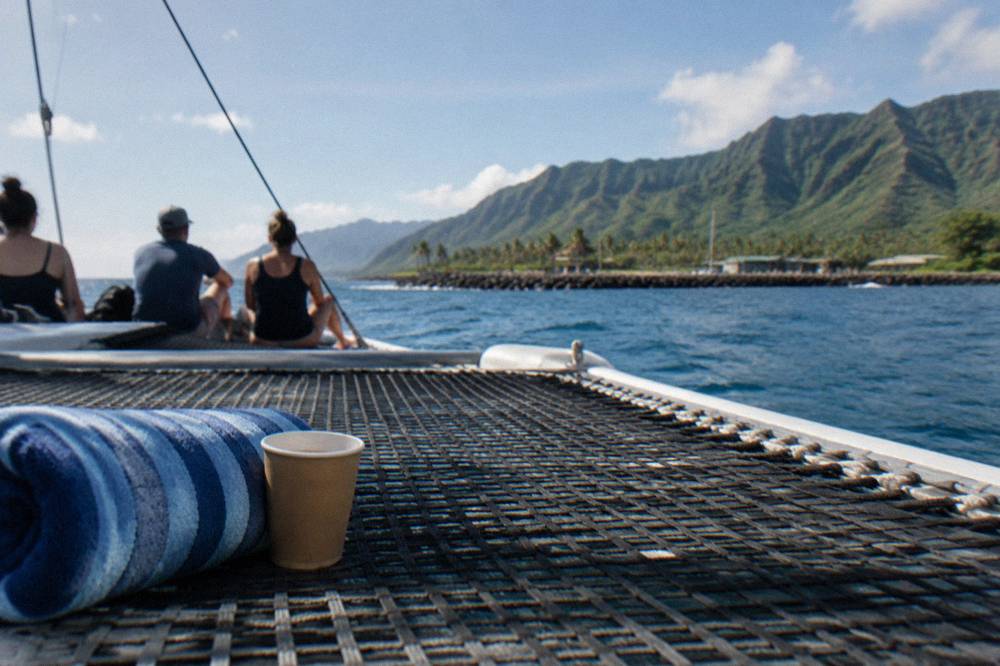
Yes, when sea conditions allow, and only from the water: rafts hold commercial permits that let them approach and sometimes enter sea caves along the coast, while catamarans are far too wide and tall to do anything but view the cave mouths from outside. Cave entry is never promised, because swell dictates it minute by minute. If caves are the reason you are booking, the raft is the only format that can deliver.
The listing language across raft operators is consistent and honest: caves are attempted when conditions permit. Summer months, roughly May through September, bring the calmer north shore conditions that make cave runs viable; in winter the same caves can be dangerous or closed to approach, and skippers simply cruise past. No operator guarantees entry on any date, and any that did would be ignoring the ocean. Kauai Sea Rider Adventures' 5-hour ultimate zodiac snorkel, rated 4.7 from 111 reviews from $257.28 per person, is built exactly around this: caves plus a snorkel stop in one trip.
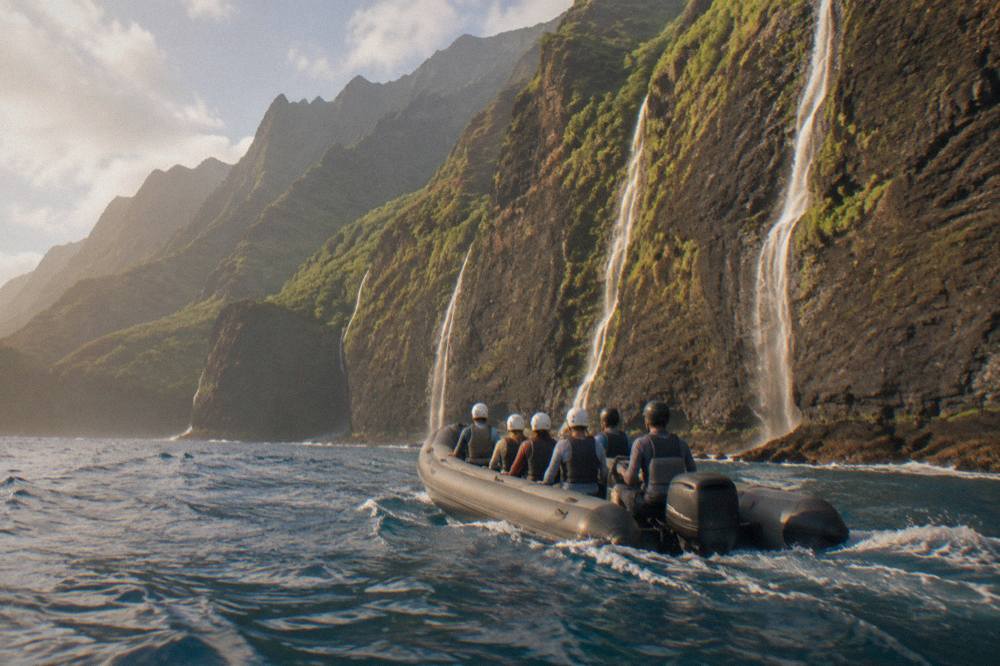
Catamarans are not shut out of the spectacle, they simply experience it differently. From a high catamaran deck you get the full wall of the cliffs, the long view down the coast and a perspective rafts cannot match because rafts sit so low. Photographers split on this: some want the low angle inside the cave mouth, others want the elevated sweep. If photographs are the point, an airplane tour of the Na Pali coast at about 1 hour 5 minutes from $159 per person, rated 4.8 from 2,105 reviews, offers a third perspective neither boat can reach.
There is also a landing format worth naming. Kauai Sea Tours runs a raft with an exclusive beach landing, about 6 hours 30 minutes, rated 5 from 105 reviews, from $277.22 per person, one of the few trips that sets foot on the coast itself rather than only viewing it. Commercial landing permits are managed by the operators under state rules, and landing access depends on the current status of the Na Pali Coast State Wilderness Park; check the current DLNR status before you count on the beach stop, and confirm the operator's schedule before booking.
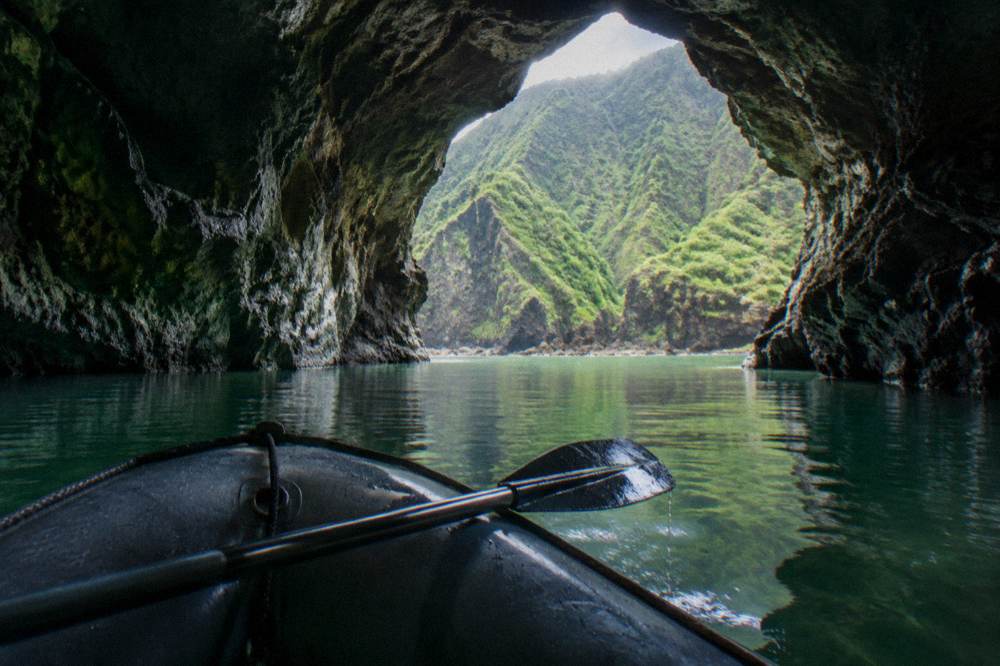
For readers weighing the landing option against staying aboard the whole way, the beach-landing raft above is the middle path: it keeps the raft's cave access and adds time on shore when the park status allows it. It is also the longest raft trip on the roster, so it doubles as the endurance pick. Either way, the landing question is a status question, not a booking question, and the operator can answer it for your date.
How Much Does Each Format Cost?
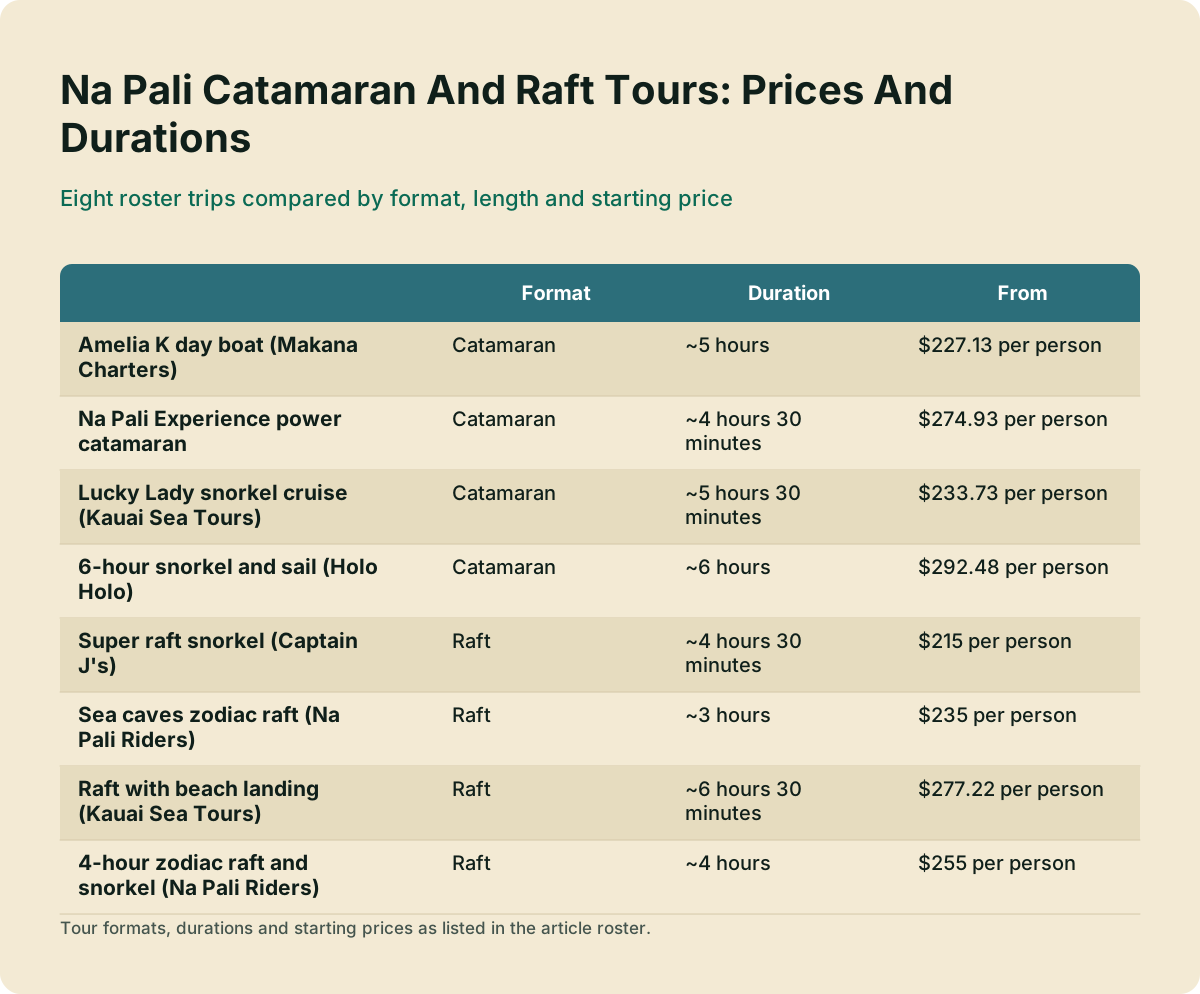
On this roster, catamaran trips run from $190.25 to $292.48 per person for roughly 4 to 6 hours, and raft trips run from $215 to $277.22 per person for roughly 3 to 6 hours 30 minutes. The formats overlap heavily on price: a budget raft and a mid-range catamaran both start at $215. Duration, food and landing permits move the number more than hull type does.
| Tour | Format | Duration | Rating | From |
|---|---|---|---|---|
| Amelia K day boat (Makana Charters) | Catamaran | ~5 hours | 4.9 from 2,052 reviews | $227.13 per person |
| Na Pali Experience power catamaran | Catamaran | ~4 hours 30 minutes | 5 from 819 reviews | $274.93 per person |
| Lucky Lady snorkel cruise with lunch (Kauai Sea Tours) | Catamaran | ~5 hours 30 minutes | 4.7 from 1,641 reviews | $233.73 per person |
| 6-hour snorkel and sail (Holo Holo) | Catamaran | ~6 hours | 4.8 from 582 reviews | $292.48 per person |
| Super raft snorkel (Captain J's) | Raft | ~4 hours 30 minutes | 4.8 from 1,724 reviews | $215 per person |
| Sea caves zodiac raft (Na Pali Riders) | Raft | ~3 hours | 4.9 from 155 reviews | $235 per person |
| Raft with beach landing (Kauai Sea Tours) | Raft | ~6 hours 30 minutes | 5 from 105 reviews | $277.22 per person |
| 4-hour zodiac raft and snorkel (Na Pali Riders) | Raft | ~4 hours | 4.9 from 957 reviews | $255 per person |
Read that table as a value map rather than a ranking. The cheapest trips are shorter raft runs or express catamarans; the expensive ones are long days that bundle snorkel time, lunch and sometimes a landing. The Holo Holo Niihau and Na Pali full day at about 7 hours from $338.72 per person, rated 4.7 from 160 reviews, shows where the ceiling goes: Lehua islet waters off Niihau, which by DLNR rule is snorkel-and-view only with landing and commercial activity prohibited below the high water mark.
One pricing nuance worth catching: the roster's "from" prices are the operator's own floors, and what you see on the operator's live listing can move with date, season and demand. Every figure above comes straight from the listings; treat them as planning anchors, not quotes. If a price is not printed here, check the listing rather than guessing, because fares change without notice and this site does not pad numbers it cannot verify.
What Does Season And Swell Do To The Choice?
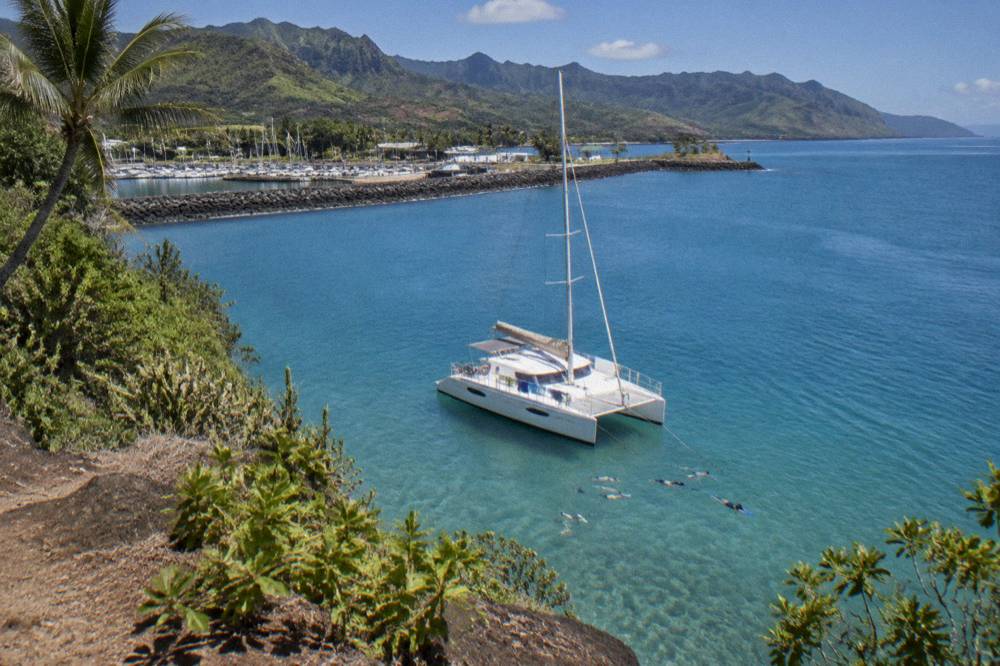
North shore and west side swell runs strongest from October through April, which makes winter raft trips rougher and cave runs less likely; May through September brings the calmer seas both formats prefer. In rougher months the catamaran's stability matters more, and in calm months the raft's advantages shine. Winter also brings humpback whales, which NOAA places in Hawaii November through April, with no sighting ever guaranteed.
The seasonal logic is simple. The big north and northwest swells arrive roughly October to April; when they run, the exposed parts of the coast get lively, small rafts cancel more often, and caves close to approach. May to September is the classic window: flatter water, better visibility for snorkeling, and the cave runs that are the raft's whole selling point. The trade-off is that summer is also the busiest season on the water, so book the popular departures well ahead.
| Season | Typical sea state | Better format | Why |
|---|---|---|---|
| May to September | Calmer, flatter mornings | Raft edges ahead | Cave runs viable, clearest snorkel water |
| October to November | Transitional, building swell | Catamaran edges ahead | Stability matters as chop returns; whales begin arriving |
| December to March | Largest swells, most variable | Catamaran | Fewer raft cave runs, more cancellations; peak whale months |
| April | Easing swell, unsettled spells | Catamaran or raft | Depends on the week; check conditions and operator schedule |
Winter is not a write-off, far from it. The whales arrive; NOAA's Hawaiian Islands Humpback Whale National Marine Sanctuary states plainly that from November through April visitors can see whales from shore and at sea, and dedicated winter trips exist for exactly this reason, such as the winter whale watching adventure from Captain J's, about 2 hours from $137 per person, rated 4.7 from 355 reviews. But no tour sells a guaranteed sighting of whales, dolphins, turtles or monk seals, and a listing that promised one would be false.
Access is the other seasonal wildcard, and this is where honesty matters most. The Na Pali coast's landings, trails and parks sit inside state park land whose status can change; storm damage and swell both close access at times, and the state manages the Port Allen launch ramp the boats use. Before any trip, check the current DLNR status and confirm the operator's schedule; every trip on this site is bookable for future dates, and the right question is always whether the operator is running your date, asked directly. The season bands on this site's homepage and the best time to visit Kauai guide go deeper on month-by-month planning.

What Does The Snorkel Stop Add To Either Trip?
Most Na Pali trips of 4 hours or longer include a reef snorkel stop, typically in a protected cove along the coast, with gear provided; it breaks up the cliff viewing with time in the water among reef fish and, often, green sea turtles. Turtles and any other wildlife are never guaranteed, water clarity depends on recent swell and rain, and rough days can skip the stop entirely.
The snorkel stop is the part of the trip that most often surprises people, in both directions. In good conditions it is the highlight: warm water, coral heads, clouds of reef fish, and frequently a sea turtle grazing below. After a rough week of swell or heavy rain, the same cove can be cloudy and disappointing, and the crew may shorten or move it. Operators make these calls on the day, and a good crew choosing safety over a mediocre snorkel is doing you a favor.
Gear and food differ by format. Catamaran cruises of 5 hours and up almost always include lunch; the Lucky Lady deluxe snorkel cruise from Kauai Sea Tours, about 5 hours 30 minutes from $233.73 per person and rated 4.7 from 1,641 reviews, is named for exactly that bundle. Rafts typically provide snorkel gear, flotation and drinks but a lighter food offering, partly because there is no galley and partly because a wet, moving raft is not a lunch venue. Check the listing's inclusions line before assuming a meal.
If snorkeling is the main reason you are on the water at all, a boat is not your only option, and for beginners it may not even be the best one. Guided shore snorkels run from about $119.80 per person with no boat and no swell exposure; the trade-offs are covered in the best Kauai snorkeling spots guide. The Na Pali stop is best understood as a bonus inside a coast cruise, not a dedicated dive experience, and divers should instead look at the roster's scuba category.
Common Questions About Catamaran And Raft Na Pali Tours
Can a catamaran enter the Na Pali sea caves?
No. Catamarans are far too wide and tall to enter the cave mouths; they view the caves from outside. Only small rigid rafts can approach and, when swell permits, enter some caves, and even then entry is conditional on the sea state that day.
Which is better for seasickness, a catamaran or a raft?
The catamaran. Its wide beam, weight and slower speed produce a steadier ride in the same swell, and larger vessels offer sheltered spaces away from spray. Take motion-sickness medication 30 to 60 minutes before departure on either boat, and prefer a morning departure.
How much does a Na Pali catamaran tour cost?
On this roster, catamaran trips run from about $190.25 to $292.48 per person for roughly 4 to 6 hours. Raft trips overlap heavily, from $215 to $277.22 per person. Prices are the listings' own "from" figures and can move with date and season; check the live listing.
Are children allowed on raft tours?
Most raft operators set minimum ages, often around 5 or 6 years, and some run higher minimums in winter; catamarans generally welcome younger children. Age rules vary by operator and trip, so read the listing's restrictions line before booking for a family.
Do Na Pali boat tours run year round?
Trips are bookable year round, but winter swell from roughly October through April brings more cancellations, especially for smaller rafts, and cave runs become less likely. Access also depends on harbor and state park status, so check the current DLNR status and confirm the operator's schedule for your date.
Is the snorkel stop guaranteed?
No. Snorkel stops depend on sea conditions and water clarity, and crews may move, shorten or skip them. Gear is provided on listed trips, and turtles and other wildlife are never guaranteed on any tour.
Whatever you choose, book the format that matches your body and your appetite rather than the one with the louder brochure. This comparison sits inside a wider set of guides at Tours In Kauai Hawaii, including the boat versus helicopter decision for readers weighing the coast from above. Both formats deliver the same cliffs in the end, and the honest summary is this: the catamaran is the safer bet for comfort, the raft is the better bet for caves, and the ocean decides the rest.