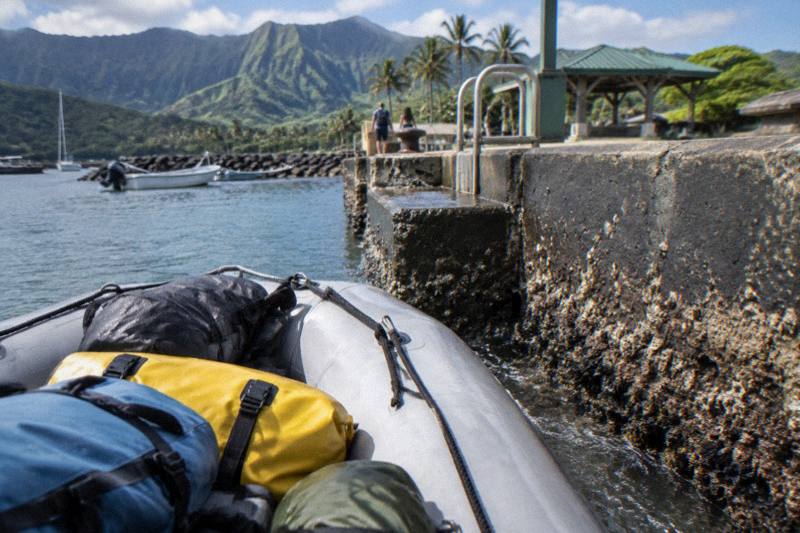
What To Wear On A Na Pali Coast Boat Tour?
A practical packing and clothing guide for Na Pali coast boat trips, covering the raft versus catamaran difference, footwear, sun protection, spray gear and what to leave behind.
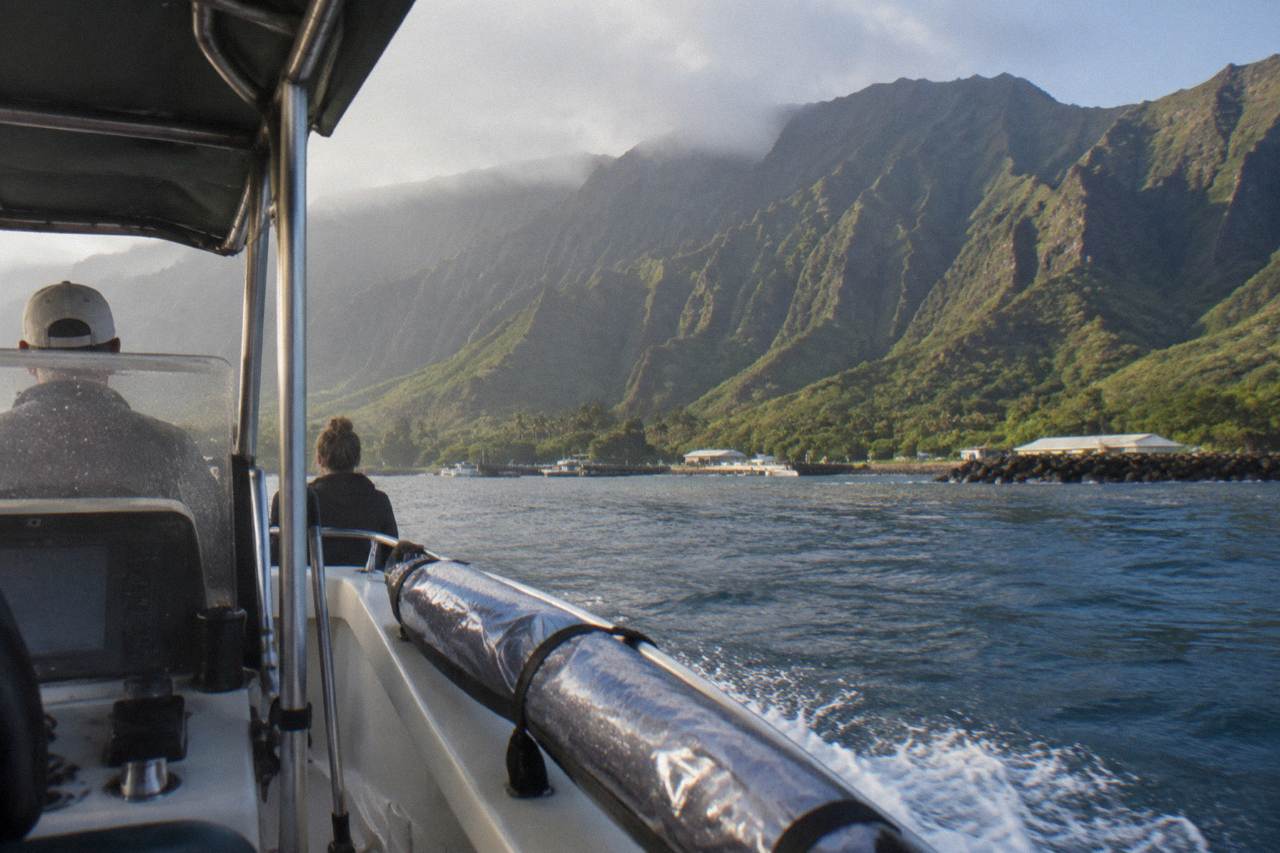
What To Wear On A Na Pali Coast Boat Tour?
Wear a swimsuit under quick-dry shorts and a rash guard or light synthetic top, with reef-safe sunscreen applied before boarding, polarized sunglasses on a retainer strap, and either secure water shoes or bare feet depending on the boat. On a rigid-hull inflatable raft you will get sprayed, so add a light windbreaker and skip anything cotton. On a catamaran, shade, dry seating and a cooler cabin change the equation, and a cover-up matters more than spray gear. The tour type, not the forecast, is the real deciding factor, and this guide breaks the decision down vessel by vessel.
The Na Pali coast runs along Kauai's northwest shore, and almost every commercial trip departs from the west side at Port Allen, which means a solid stretch of open-ocean running before the cliffs appear. Operators such as Captain J's Kauai Offshore Adventures, Kauai Sea Tours, Makana Charters, Holo Holo Charters and Na Pali Riders all run this coastline, on vessels ranging from 24-foot zodiac rafts to 65-foot sailing catamarans. Same coast, same morning sun, very different clothing problems. A guest who dresses for a catamaran and ends up on a raft spends five hours damp; the reverse, a guest in full spray gear on a shaded catamaran deck, simply overheats. Dressing right matters more here than almost anywhere else on the island, because this coastline is what most visitors come for, as our guide to Kauai's single most popular experience makes clear.
Booking language on every listing notes that trips are bookable for future dates and that you should confirm the operator's current schedule, since weather and ocean conditions can change or cancel any departure. Land access along the coast itself is managed by Hawaii's state parks division, and the Na Pali Coast State Wilderness Park page is the reference for current status before you go.
Before the details, a quick orientation to the three formats you are most likely choosing between:
The first is a fast super raft with a big review pool, the second a classic power catamaran, and the third a longer raft-and-snorkel day. Dress for the one you actually book, and when in doubt, dress for spray.
What Should You Wear On A Raft Tour Versus A Catamaran Tour?
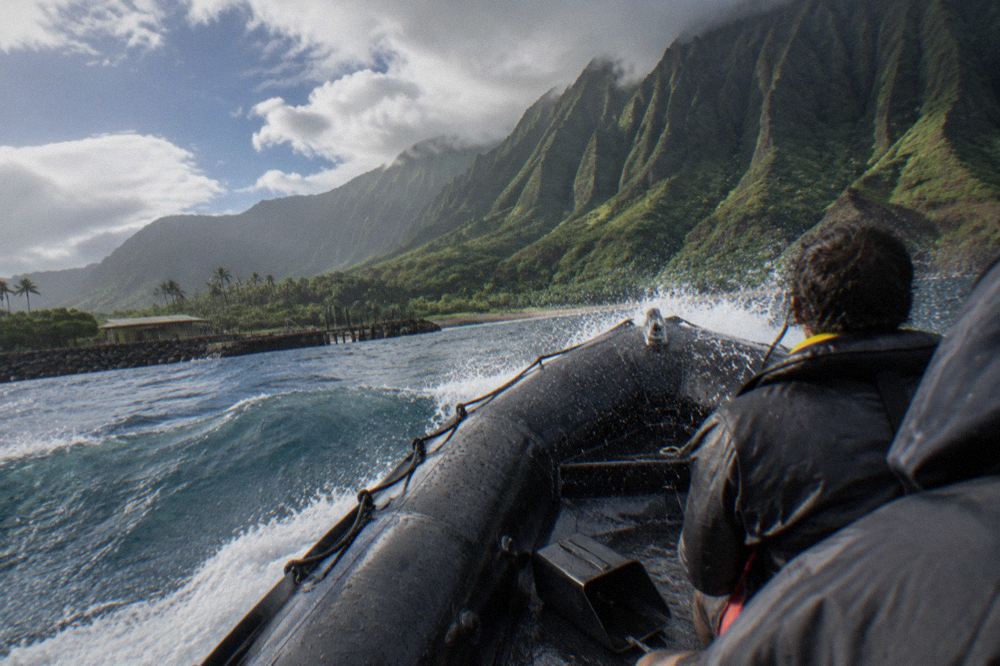
On a raft tour, wear quick-dry everything, a windbreaker and a secure hat, because these boats run fast, sit low and take spray across the whole passenger area in anything but flat-calm conditions. On a catamaran tour, you can dress more simply, keeping the quick-dry basics but skipping the spray-ready extras for a lighter, more relaxed setup. Catamarans are drier, shaded for part of the deck and steadier underfoot, so a swimsuit, cover-up and sandals are usually enough. The single biggest clothing mistake on this coast is treating the two formats as interchangeable, because a raft at 30 knots generates its own weather.
On the raft side, the 4-Hour 30-Minute Super Raft Snorkel run by Captain J's Kauai Offshore Adventures is a good example of the format: 4.8 from 1,724 reviews, from $215 per person, roughly four and a half hours with a snorkel stop. The listing's own duration tells the clothing story, since several of those hours are spent underway at speed with wind chill on wet fabric. A cotton t-shirt that soaks through stays cold for hours. A fleece, the mainland instinct, is worse, because it holds seawater against your skin. Guides on these trips consistently recommend board shorts or quick-dry hiking shorts, a rash guard or nylon long-sleeve, and a light shell you can zip over it once the boat turns downwind.
Catamarans change the math. The Amelia K day boat tour from Makana Charters, 4.9 from 2,052 reviews and from $227.13 per person, runs about five hours with cabin space, shaded seating and a bathroom aboard. Kauai Sea Tours' Lucky Lady snorkel cruises, from $233.73 per person, are similar. On these boats the spray problem mostly disappears and the sun problem grows, because you can sit in dry shade and forget you are ten degrees north of the tropic of Cancer in reflected sunlight.
Here is the practical comparison:
| Item | Rigid raft or zodiac | Sailing or power catamaran |
|---|---|---|
| Base layer | Swimsuit plus rash guard | Swimsuit plus cover-up or tee |
| Outer layer | Light windbreaker or spray shell | Usually unnecessary, optional light layer |
| Bottoms | Board shorts or quick-dry shorts | Shorts, quick-dry preferred |
| Footwear | Barefoot, or strap sandals with heel strap | Flip-flops acceptable, sandals fine |
| Hat | Fitted cap with retention cord | Any sun hat |
| Towel | Small packable one, in dry bag | Often supplied or less needed |
| Dry storage | Bring your own dry bag | Cabin storage usually available |
If your heart is set on the raft experience but you want the longest, most feature-rich version of it, the discussion in our Na Pali catamaran versus raft guide walks the trade-off in depth, and the question is a Na Pali catamaran tour worth it covers the comfort case from the other side.
Do You Need A Rash Guard Or Is A Bathing Suit Enough?
A bathing suit alone is enough for the snorkel stop itself, but a rash guard or synthetic long-sleeve is the better call for the whole day, because it doubles as sun protection, cuts wind chill on the ride and works under a shell. Hawaiian sun through a few hours on open water will outlast any single sunscreen application, and fabric does not wash off when you swim.
The arithmetic is simple. Most Na Pali trips run three to eight hours. The longer options, like the 8-Hour Niihau Snorkel Cruise from Holo Holo Charters at from $361.31 per person, or the 6-Hour Snorkel and Sail at from $292.48 per person, put you on the water through the middle of the day, when ultraviolet exposure peaks and the water reflects it upward from every angle. A wet cotton shirt protects far less than a dry one, dries slowly and stays clammy. Nylon and polyester blends dry in minutes and keep their ultraviolet protection wet, which is why they are the standard on every surf and snorkel operation in Hawaii. Since those long cruises bring you within sight of the Forbidden Isle, you might wonder whether you can actually step ashore, and what happens if you try to visit Niihau explains how the rules really work.
Rash guards also solve a problem specific to rafts: the seating. On zodiac-style boats such as the 3-Hour Sea Caves Zodiac Raft from Na Pali Riders, 4.9 from 155 reviews and from $235 per person, passengers sit on inflated tubes and holding lines, sometimes leaning against wet fabric for hours. Sleeves prevent chafe in a way sunscreen cannot. For the same reason, avoid anything with metal zippers, studs or bulky seams across the back.
For women specifically, a two-piece swimsuit under a full-coverage rash guard and shorts is the combination guides mention most often, because it makes snorkel stops, bathroom breaks on catamarans and wet horseback-style re-entries over a raft tube all simpler. One-piece suits work equally well under a guard; the garment doing the work is the layer on top.
What Footwear Works Best On A Na Pali Boat Tour?
Bare feet and sandals with a heel strap are the two best choices for a Na Pali boat tour, since both handle wet conditions and stay secure on your feet. Anything that cannot get wet, cannot stay on your foot, or marks the deck is the wrong pick for this trip. Most raft operators ask you to remove shoes entirely before boarding, since wet soles on inflatable tubes are a slipping hazard and deck surfaces are designed for bare skin. Catamarans are more forgiving, but flip-flops on a rocking boat are still an ankle-roll waiting for a swell.
The pattern across Kauai operators is consistent. Zodiac and rigid-hull inflatable trips, the 4-Hour Zodiac Raft and Snorkel from Na Pali Riders at from $255 per person, or the 5-Hour Ultimate Zodiac Snorkel from Kauai Sea Rider Adventures at from $257.28 per person, board from beaches or ramps where you wade to the vessel. Water shoes with a real heel strap are the best compromise here: they protect your feet on the sand and coral rubble at the entry point and come off cleanly once you are seated. Slip-on water socks work too, though on some rafts even those come off.
On catamarans like the Lady Kailani, from $260.91 per person, boarding is from a dock or harbor, so ordinary sandals are fine. The single rule that survives every vessel type: bring footwear you are willing to lose overboard, because anything loose on a bouncing deck eventually goes into the Pacific. That is also the argument for a cheap pair rather than your running shoes.
| Footwear type | Raft suitability | Catamaran suitability | Notes |
|---|---|---|---|
| Bare feet | Good, usually required | Fine | Best on inflatables, watch the ramp |
| Strap sandals (heel strap) | Good | Good | The all-around safest pick |
| Flip-flops | Poor, easily lost | Acceptable | Expect them to move around |
| Water shoes or socks | Good | Fine | Take them off if asked |
| Sneakers or leather shoes | No | Poor | Soak, stain, never dry |
One more practical point: if your tour includes a beach landing, such as the Exclusive Beach Landing Raft from Kauai Sea Tours at from $277.22 per person, roughly six and a half hours, you will want something on your feet ashore, since Hawaii beaches carry sharp coral and kiawe thorns. Confirm landings with the operator, because commercial landing permissions on the coast are managed by the state and conditions change.
Should You Bring A Jacket Or Windbreaker?
Yes, pack a light jacket or windbreaker if you'll be rafting, since you'll want a light layer on the water; if you're booked on a catamaran you'll rarely need one, and a heavy jacket is never a good choice for either, so keep whatever you bring light and easy to stow. A light windbreaker or spray shell is the single most underrated item on fast boats, because the combination of boat speed, trade winds and wet clothes produces real wind chill even in eighty-degree air. On a catamaran the same jacket spends the trip in your bag, but it weighs nothing and saves the day when a squall line crosses the channel.
The way to think about it is layering, the same logic you would apply to a hike. A rash guard is your base. The windbreaker is your shell. Between them they handle everything from flat-calm snorkeling to a wet bumpy return trip, and both dry fast. What does not work: cotton hoodies, which absorb half their weight in seawater; denim anything; and insulated jackets, which turn into a wetsuit you did not ask for.
Morning departures deserve the jacket most. Many operators run early trips to beat the afternoon trade winds and swell, and the consensus on morning versus afternoon Na Pali trips is that mornings are calmer but cooler on the run out. The first hour of a 7 a.m. raft departure, in spray, with the boat at cruising speed, is the coldest you will be all day in Hawaii. The jacket earns its spot in exactly that hour.
What Sun Protection Actually Matters On The Water?
What actually matters on the water comes down to three things: reef-safe sunscreen applied before boarding and reapplied at the snorkel stop, polarized sunglasses with a strap so they stay put, and a brimmed hat you can secure so it does not blow away mid-trip. Reflected ultraviolet radiation off the water means you burn in places the sun never directly hits, including under your chin and inside your ears, and Hawaii law requires reef-safe formulas, meaning no oxybenzone and no octinoxate, sold island-wide.
Spray sunscreen has a second problem specific to boats: most of it ends up in the wind and on the deck rather than on you. Lotion wins on the water. Apply the first coat at the dock, fully, before you board, because it needs fifteen minutes to bond and the trip starts moving immediately. Reapply after every swim. Zinc-based sticks for the face survive sweat and salt water better than anything else.
Polarized sunglasses are not a luxury here. They cut the surface glare that otherwise makes the coast hard to photograph and make turtles, reef fish and dolphins visible through the top few feet of water. The strap matters more than the lens: the Pacific collects sunglasses at an impressive rate, and a $5 retainer is cheaper than any pair of glasses. Hats follow the same rule; a gust at speed will take an unsecured brim, so take a hat that cinks down or a cap you can stuff in a pocket.
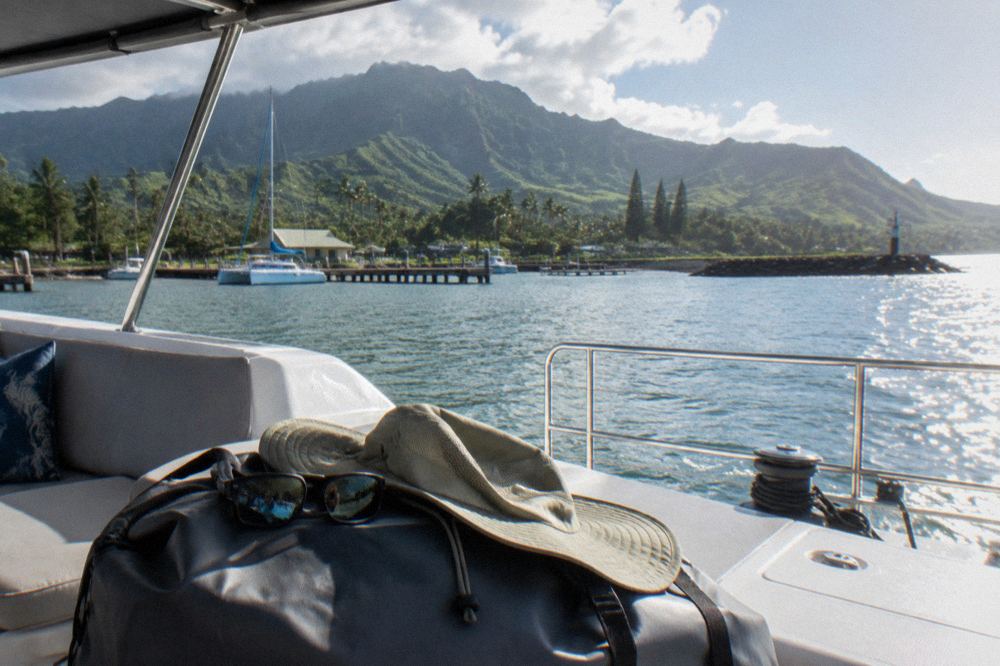
Shoulder and neck coverage earns a special mention for the sunset and dinner format. On the Na Pali sunset sail with buffet dinner from Holo Holo Charters, 4.7 from 234 reviews and from $247.32 per person, or the Leila sunset dinner sail at from $263.82 per person, you are on the water through the late afternoon and evening, when the angle of light hits shoulders horizontally and the temperature drops after the sun goes down. A light long-sleeve serves both.
What Should You Not Wear On A Na Pali Coast Boat Tour?
On a Na Pali Coast boat tour, skip cotton, denim, dresses, and long skirts, along with jewelry, expensive watches, and contact lenses unless you can wear goggles. You should also leave behind anything you would be upset to lose or unable to replace once you are out on the water. The boat is wet, salty, fast in places and completely unforgiving of wardrobe malfunctions. Everything you wear should be something you could swim in without thinking twice.
Jewelry deserves its own sentence. Rings, chains and earrings come off in the water and are gone, and a necklace under a wetsuit or rash guard can press into skin for hours. Phones follow the same logic: bring one only in a floating waterproof case with a lanyard, and keep it zipped away except for photos. Every Na Pali operator has watched an unsecured phone slide across a deck and over the side.
Cotton, covered above, is the repeat offender. Denim is the worst version of cotton, since wet jeans are heavy, chafe and take a full day to dry. Dresses and loose skirts turn into a problem the moment the boat turns into the wind. And white or light fabrics you love will pick up sunscreen stains that never wash out; save them for dinner in Poipu.
Finally, skip aerosol anything, including spray sunscreen and perfume, both out of reef-safety concerns and courtesy in a confined stern area. A surprising number of guests also arrive in brand-new water shoes still stiff from the box; break them in, or expect blisters on the ramp.
What Should You Pack In Your Dry Bag?
Pack a small dry bag or a large zip-seal bag with the essentials: a towel for drying off, sunscreen for reapplication during the trip, a motion-sickness remedy taken before boarding, a hat, your ID and a card, and a sealed phone case to keep your phone protected from water. That is the whole kit. Everything else, including towels larger than a hand towel, big camera rigs and spare outfits, is dead weight in a shared storage space the size of a backpack.
Motion sickness belongs on a clothing-and-packing list because timing is everything: remedies work before symptoms start, not after. If you are prone, take your preferred remedy an hour before departure and pack a second dose for the return leg, since the ride back into the trades is usually the bumpier half. The practical realities are covered in detail in our seasickness guide for Na Pali boat tours, including which seat positions ride smoothest.
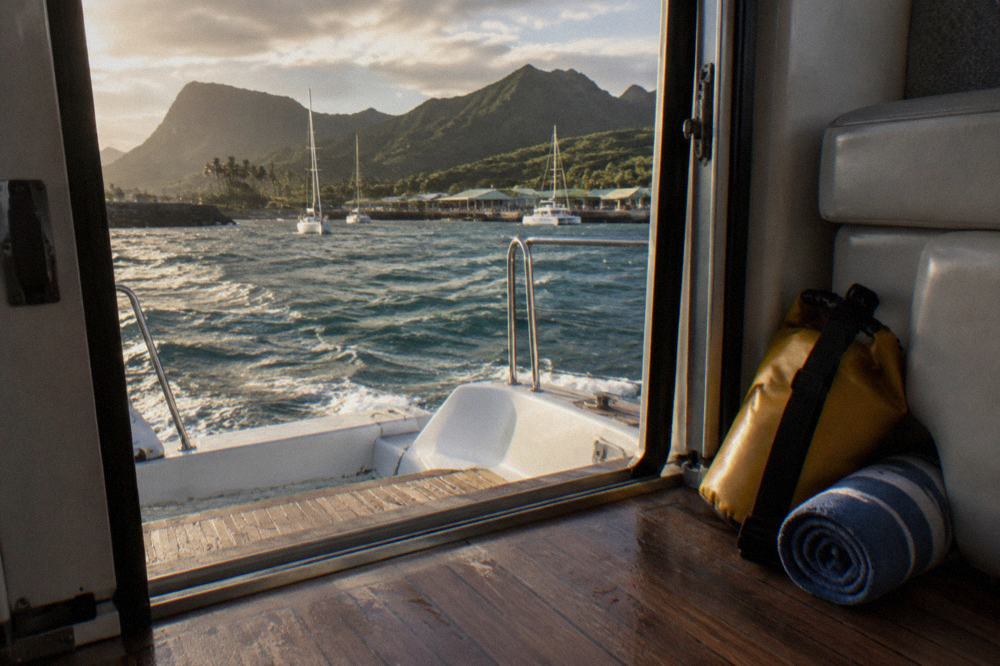
Here is a checklist you can screenshot:
| Item | Why | Raft | Catamaran |
|---|---|---|---|
| Swimsuit worn under clothes | Fast boarding, snorkel stop | Yes | Yes |
| Rash guard or synthetic long-sleeve | Sun and chafe protection | Yes | Yes |
| Quick-dry shorts | Comfort wet or dry | Yes | Yes |
| Light windbreaker | Wind chill on the run | Yes | Optional |
| Strap sandals or water shoes | Ramp and beach entry | Yes | Optional |
| Brimmed hat with cord | Sun, stays aboard | Yes | Yes |
| Polarized sunglasses with strap | Glare, wildlife spotting | Yes | Yes |
| Reef-safe sunscreen lotion | Reapply after swims | Yes | Yes |
| Small towel | After snorkel | Yes | Usually provided |
| Motion-sickness remedy | Take before boarding | Yes | Yes |
| Sealed phone case with lanyard | Photos, flotation | Yes | Yes |
| ID and one card | Check-in | Yes | Yes |
One note on towels: catamaran operators, including the Port Allen sail and snorkel trips from Holo Holo Charters at from $274.20 per person, usually carry towels or have them available, while rafts rarely do. If in doubt, a packable microfiber towel weighs almost nothing.
What Should Kids Wear On A Na Pali Boat Tour?
Kids should wear the same kit as adults, scaled down for smaller bodies and with sun protection doubled up throughout the day. The most important item is a properly fitted life jacket, which the operators provide; children should keep it on for the entire trip rather than only at the swim stop. Children get colder faster than adults in wind and spray, so the rash guard plus windbreaker combination matters more for them, not less, and a spare dry layer in the dry bag turns a shivering child back into a happy one.
Age minimums vary by format, and they are worth checking against the listing before you shop for outfits. Zodiac and raft trips typically carry higher minimum ages than catamarans, precisely because of the spray and pounding. On the family-friendlier catamaran side, the Navigator Catamaran Snorkel from Napali Navigators, 5 from 226 reviews and from $215 per person, and the Amelia K are common family picks. Whatever the vessel, put kids in clothes that can go straight into the ocean, since the snorkel stop is usually the highlight of their day.
Hats and sunglasses on children are a losing battle half the time, which is the argument for a full-coverage rash guard rather than relying on sunscreen alone. Bring the sunscreen anyway and reapply it yourself, since kids rarely notice burning until it has happened. And pack a dry change of clothes for the ride home; a wet, salty, wind-chilled child in the car is the last memory of an otherwise great day.
For parents comparing the whole field, the family tours guide ranks the boat options against ziplines, luaus and farm visits.
How Does The Season Change What You Wear?
The season changes what you wear quite a bit: summer trips, roughly May through September, lean hot and calm with a stronger sun load, so you dress light and guard against the sun, while winter trips, October through April, bring bigger north swells, more spray, more cancellations and a genuine case for a warmer layer. The same rash-guard-and-shorts kit covers both, but the outer layer and your expectations should shift with the calendar.
The seasonal mechanics matter for clothing because the north shore swell season, October through April, is exactly when raft trips get wettest and most likely to be rescheduled. West-side catamaran departures from Port Allen run more reliably across the year, which is one reason the format dominates the winter months. If you are booking a raft in winter, treat the windbreaker as mandatory and add synthetic leggings under shorts if you run cold.
There is one seasonal bonus worth dressing for: humpback whales. The NOAA Hawaiian Islands Humpback Whale National Marine Sanctuary notes that from November through April whales can be seen from shore and at sea, and winter boat trips double as whale watches at no extra charge, with dedicated options like the Winter Whale Watching trip from Captain J's at from $137 per person. No sighting is ever guaranteed, any more than a sea cave or a dolphin pod is, but binoculars, a warm layer and a seat on the port or starboard rail are the right preparations.
Winter also means shorter days and earlier departures, so that cold first hour happens in the dark half of dawn. The dry-bag spare layer earns its keep again.
Common Questions About Na Pali Boat Tour Clothing
What To Wear On A Na Pali Coast Boat Tour?
Wear a swimsuit under quick-dry shorts and a rash guard, add a light windbreaker on rafts, go barefoot or wear strap sandals, and bring reef-safe sunscreen, polarized sunglasses on a strap and a secured hat. On a catamaran the spray layers matter less and sun protection matters more, but the base kit is the same for both.
Do I need a wetsuit for snorkeling on Na Pali?
Usually no. Kauai water temperatures are comfortable enough for an hour of snorkeling in a rash guard for most people, and operators provide flotation. If you chill easily, a thin neoprene top or a long-sleeve rash guard covers it. Check the listing, since a few dive-oriented trips include suits.
Can I wear flip-flops on the boat?
On catamarans, yes, though they slide on wet decks. On rafts, operators usually ask you to remove footwear before boarding, and anything loose tends to go overboard anyway. Strap sandals or water shoes with a real heel strap are the safer choice across every format.
Should I bring a towel?
Yes on rafts, where storage is minimal and towels are rarely provided. On catamarans towels are often available or for sale. Either way a packable microfiber towel takes almost no space in a dry bag and dries fast.
What do I do with my phone and camera?
Phone in a sealed waterproof case with a lanyard, kept zipped except when shooting. Large cameras belong in a dry bag or, on catamarans, in cabin storage. Many operators sell photo packages or shoot photos for you, which removes the risk entirely.
Is there anywhere to change on the boat?
Catamarans carry a bathroom and sometimes a small changing area, so arriving in your swimsuit under clothes is easy. Rafts generally have no changing space at all, so wear your suit on and add or shed layers on deck.
If you are still deciding between formats rather than outfits, the planning pages on Tours In Kauai Hawaii compare the catamaran and raft fleets side by side, season by season, and the trio below is a solid shortlist for either answer.