Which Month Is Rainiest In Kauai?
March is the rainiest month at Lihue with 5.61 inches of rain on average, and the north shore is wetter still. Here is how Kauai rain works by month and what it means for tours.
Which Month Is Rainiest In Kauai?
Kauai is one of the wettest inhabited islands on earth, but its rainfall is not spread evenly across the calendar or across the island. The measured answer to the rainiest month question comes from the official climate normals recorded at Lihue Airport, and it points squarely at March. What that number means for your trip depends heavily on which shore you are standing on, because the north shore catches far more rain than the dry southeast corner where the rain gauge sits. All that rain is part of what keeps the east side so green, and if a trip up the Wailua River is on your list, our guide to the Fern Grotto's new rules explains what has changed and how it affects your visit.
March is the rainiest month in Kauai at the island's official measuring station in Lihue, which averages 5.61 inches of rain that month in the 1991 to 2020 climate normals. November and December follow at 4.03 and 4.64 inches respectively, while July is the driest at 1.75 inches. Those figures come from the National Centers for Environmental Information station at Lihue Airport, the reference site for the whole island. The catch is that Lihue sits on the relatively dry southeast side, so the north shore and the summit country around Mount Waialeale are dramatically wetter in every month of the year.
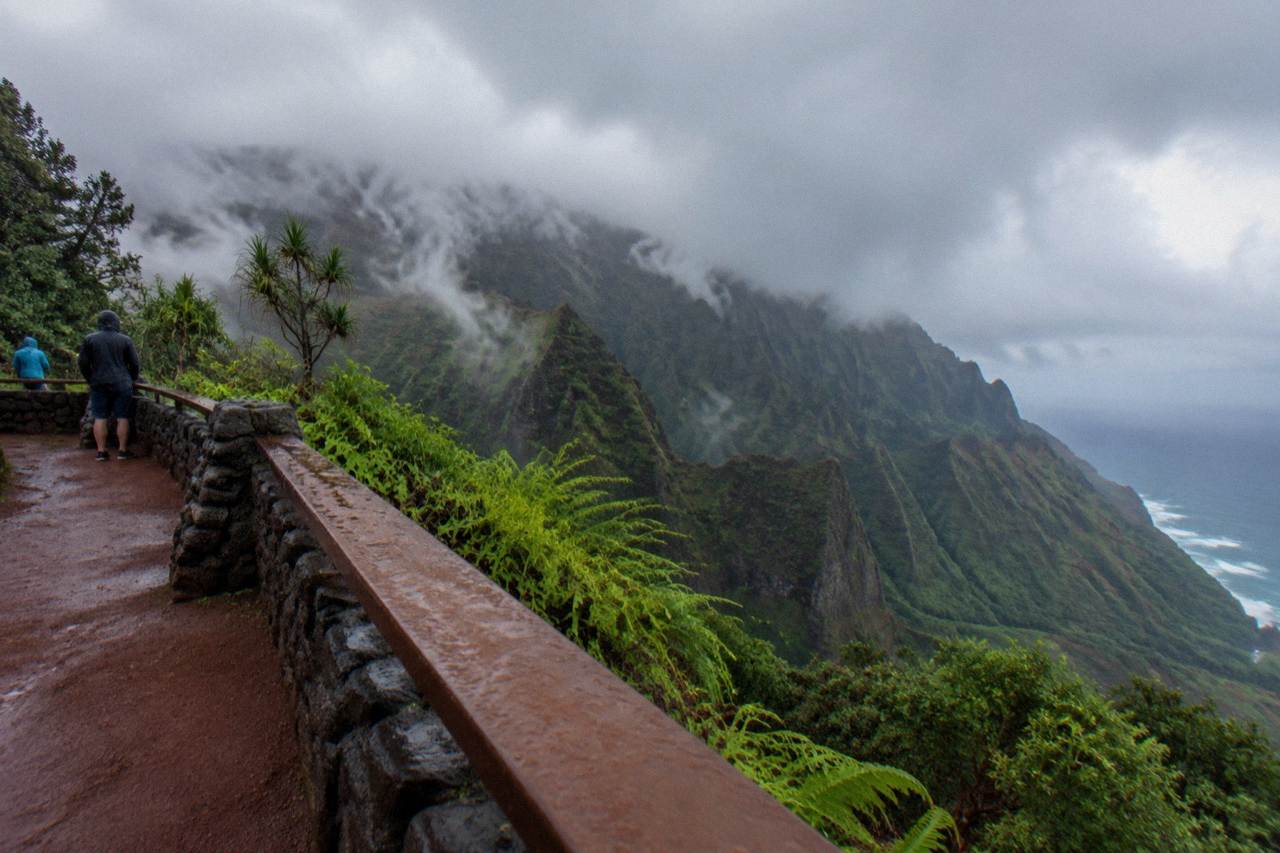
The practical takeaway for a visitor is not that March is unvisitable. Far from it. Rain on Kauai tends to arrive in bursts, often overnight or in the morning, and the same day can hold sun, a squall, and a rainbow in the space of an hour. What the March peak does affect is your odds on the two most weather-sensitive bookings on the island: helicopter flights and Na Pali boat trips. Both get cancelled for weather more often in the wet months, and both rebook fast when a clear window opens.
If you are planning around weather rather than just curious about it, the deeper guide to Kauai weather month by month breaks down temperatures and rain odds for every month, and the broader best time to visit Kauai guide weighs rain against crowds and prices.
For rainy-day planning specifically, three tours on this site hold up well when the forecast turns: the Lydgate Farms chocolate tasting, a small-group waterfalls and geysers tour that leans into the wet weather, and the Princeville Botanical Gardens walk with its own chocolate tasting.
How Much Rain Does Each Month Get In Lihue?
Lihue's monthly rainfall follows a clear seasonal curve, with the official averages at Lihue Airport ranging from a low of 1.75 inches in July to a peak of 5.61 inches in March, and the annual normal totals 36.22 inches. That means the wettest month gets roughly three times the rain of the driest one, and the table below shows all twelve months so you can place your travel dates on the curve.
| Month | Average Rain (inches) | Mean High (F) | Mean Low (F) |
|---|---|---|---|
| January | 2.78 | 78.6 | 66.0 |
| February | 3.63 | 78.1 | 66.2 |
| March | 5.61 | 78.5 | 67.3 |
| April | 2.03 | 79.8 | 69.5 |
| May | 2.18 | 81.6 | 70.9 |
| June | 1.79 | 83.3 | 73.4 |
| July | 1.75 | 84.6 | 74.6 |
| August | 2.33 | 85.2 | 75.2 |
| September | 2.18 | 85.3 | 74.8 |
| October | 3.27 | 83.9 | 73.6 |
| November | 4.03 | 81.2 | 71.3 |
| December | 4.64 | 79.1 | 68.6 |
The pattern in the table is a classic Hawaii one. Winter months, from November through March, carry the highest totals, and the summer months from June through August are the driest stretch of the year. March stands out even within the wet season, more than double the February figure in the same dataset. The source is the NCEI monthly normals for the Lihue station, fetched directly from the agency's own access service.
One nuance worth knowing before you over-read any single month. Averages hide the shape of Hawaiian rain, which skews toward short intense showers rather than all-day soakers, especially on the south and east sides. A month with five inches might still give you sunny mornings most days. Temperature barely moves across the year, with highs staying in a narrow band from the high 70s to the mid-80s, so rain is really the only seasonal variable that should shape your packing and your bookings.
Is The North Shore Always Wetter Than Lihue?
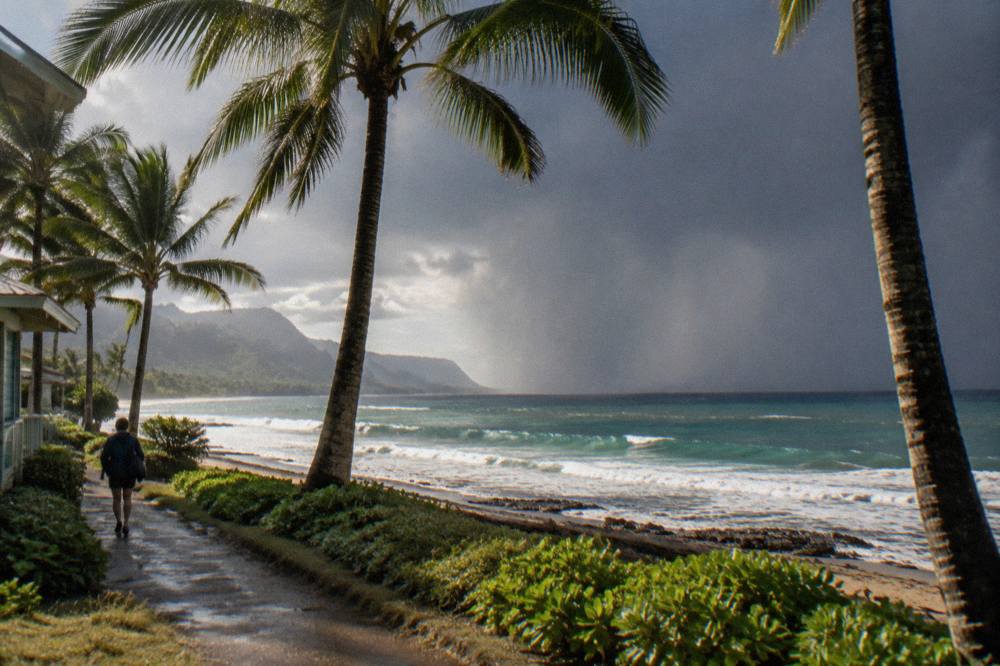
Yes, the north shore is wetter than Lihue in every single month of the year. Prevailing trade winds push ocean moisture up against the mountains and drop it on the windward slopes, so places like Hanalei, Princeville, and Haena sit in the wet zone, while Lihue Airport on the drier southeast corner records a modest 36.22 inches annually, and the summit country inland is wetter still.
The same trade-wind mechanics that soak the north shore also explain why the south side, around Poipu and Koloa, is the sunnier base for a beach-first trip. A single day on Kauai can easily hold rain in Hanalei and full sun in Poipu, an hour's drive apart. Locals plan around this constantly, and visitors quickly learn the trick: if the north shore is drenched, drive south, and if the south is gray, the north often clears after the morning trade showers pass.
For tours, this geography matters more than the calendar. A helicopter flight over the wet interior depends on cloud cover over the mountains, not on the rain gauge at the airport. Boat trips on the south shore can run on days when north shore swell shuts down Na Pali departures. The winter month question and the shore question interact too: October through April brings larger northwest swells, which stacks rough seas on top of the rainier months, while May through September is the calmer, drier window.
What Is The Driest Month In Kauai?
July is the driest month in Kauai at the Lihue station, averaging just 1.75 inches of rain, with June nearly matching it at 1.79 inches and August rising modestly to 2.33 inches. Together, June through August forms the driest sustained stretch of the year and coincides with the calmest north shore conditions, when summer swell typically runs one to three feet.
The trade-off is the familiar one for Hawaii in summer: everyone else has figured this out too. Summer carries peak-family-vacation demand, fuller boats, and fuller roads on the north shore. The value windows are the shoulder edges, roughly late April through early June and September, when rain is still modest, seas are workable, and crowds thin out. September is a particular sleeper in the data: 2.18 inches of rain, the warmest average highs of the year at 85.3 degrees, and post-summer pricing.
Temperature should not drive your choice much, since the range is narrow all year. Rain and swell should. If your trip centers on a Na Pali boat tour, a snorkel trip to Lehua, or a north shore kayak outing, bias toward the drier, calmer months. If it centers on waterfalls, bias the other way: Kauai's falls are at their most impressive after wet-season rain, and the rivers run fuller from November through March.
That is the logic behind one of this site's favorite wet-season products, the small-group Legends, Waterfalls and Geysers tour from Kauai Soul Travel, about 6 hours from $210 per person, rated 4.9 from 201 reviews. It is a tour that is genuinely better with recent rain, since the falls and the famous Spouting Horn geyser put on more of a show when the water is moving.
Does Rain Mean Your Tour Is Cancelled?
No, rain by itself almost never cancels a Kauai tour, since operators call off trips only when conditions are unsafe rather than merely wet. Helicopter flights are grounded by low cloud over the interior mountains under visual flight rules, and Na Pali raft trips depend on swell and sea state, so a passing shower cancels neither booking.
What rain does change is snorkel visibility. Heavy rain inland sends turbid brown water down rivers and out along the coast, and operators will move a snorkel stop or swap it for more sightseeing rather than swim in murky water. The listing for any given trip is the place to check its specific weather policy, because terms differ: most boat and helicopter operators offer free rescheduling or refunds when they cancel for weather, and most will not refund a no-show who decided the forecast looked gray that morning.
The practical rules visitors should follow are simple. Book weather-dependent tours early in your trip, not on your last day, so a cancellation can be rebooked. Keep a flex day. And for the state parks and trails that anchor many itineraries, including Waimea Canyon, Kokee and the Na Pali coast areas, check the current DLNR status before you go, since access conditions change and the state's Important Park Notices page is the authoritative source.
Land-based tours are the most rain-resilient category on the island. A chocolate farm tasting, a botanical garden walk, a cooking class or a luau runs in all but the most severe conditions, and much of Kauai's best food-and-farm content happens under roofs or canopies anyway. This is also why smart Kauai itineraries always carry one or two wet-weather options in their back pocket.
Which Tours Work Best On A Wet Day?
The best wet-day tours on Kauai are food and farm experiences, garden walks, and waterfall-focused excursions, since they either ignore rain or benefit from it. Strong options include chocolate tastings on the east side and north shore, a honey and bee farm tour, plantation-era estate visits, and hands-on cooking classes. Several are partly or wholly under cover, so they hold up reliably even when the afternoon turns soggy.
| Tour | Duration | From | Rating | Rain Fit |
|---|---|---|---|---|
| Chocolate Farm Tasting (Lydgate Farms) | ~3 hours | $145 per person | 4.9 from 1,107 reviews | Excellent, mostly under cover |
| Honey and Bee Tour (Lydgate Farms) | ~2 hours | $120.42 per person | 5 from 65 reviews | Excellent, small pool of reviews |
| Princeville Botanical Gardens, Chocolate Tasting | ~3 hours | $126 per person | 4.8 from 884 reviews | Good, garden walk plus covered tasting |
| Waterfalls and Geysers Small-Group Tour | ~6 hours | $210 per person | 4.9 from 201 reviews | Better with recent rain |
| Corner Store Cooking Class | ~3 hours | $174 per person | 5 from 43 reviews | Excellent, indoors, small pool of reviews |
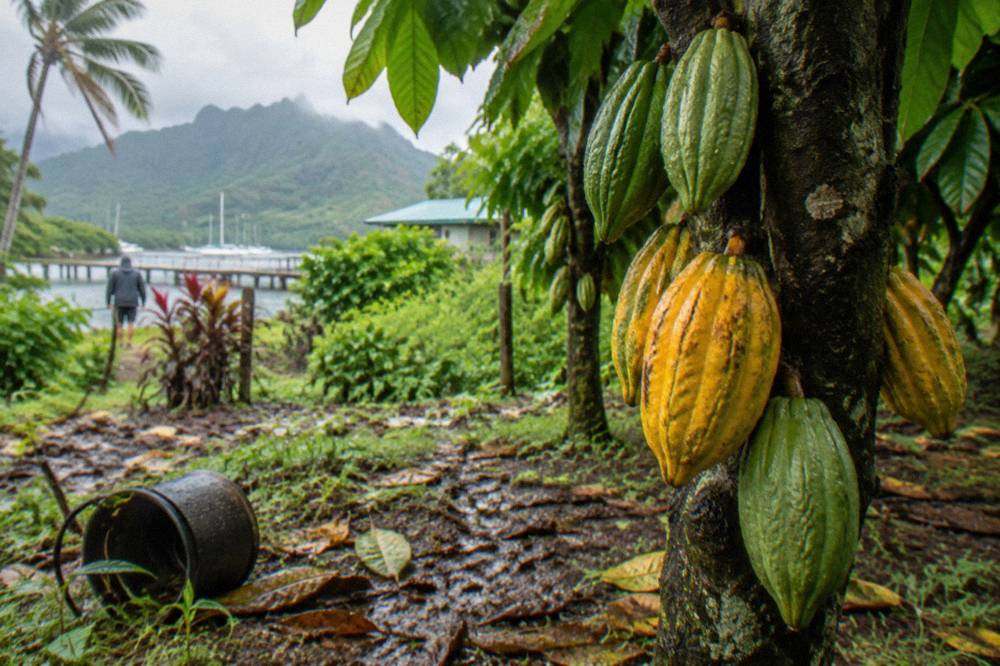
The Lydgate Farms chocolate tasting deserves its spot at the top of that list for reasons beyond weather-proofing. It is a branch-to-bar walk through a working cacao and vanilla farm, it holds a 4.9 rating from 1,107 reviews, a genuinely large pool for a farm tour anywhere, and at roughly three hours from $145 per person it leaves room in the day for a rain-free window elsewhere. Check availability on the listing if a wet day looms, and read more in the guide to Kauai rum, chocolate and coffee tours.
Up north, the Princeville Botanical Gardens tour pairs a guided garden walk with a chocolate tasting, about 3 hours from $126 per person, rated 4.8 from 884 reviews. Light rain on a tropical garden is closer to atmosphere than hardship, and the tasting portion gives you a dry landing. Pair it with the rainy day tours guide for a fuller wet-weather bench, or with the best snorkeling spots guide for the days that clear.
When Should You Visit For The Least Rain?
Visit between June and September for the least rain, with July the driest month at just 1.75 inches in the official record. If you would rather avoid midsummer crowds, the shoulder windows of late April through early June or September still deliver noticeably drier weather. Skip November through March, when the wet season peaks in March at 5.61 inches.
Your choice of shore matters as much as your choice of month, and the two decisions compound. A March trip based in Poipu will often feel drier than a May trip based in Hanalei, because the southeast corner sits in the island's driest belt. A summer trip to the north shore gives you both the seasonal minimum in rain and the calmer north-facing seas that open up boat access to the Na Pali coast. The where to stay on Kauai guide covers this geography in detail.
There is also a case for embracing the wet season rather than dodging it. Whale watching is a winter activity, with NOAA's Hawaiian Islands Humpback Whale National Marine Sanctuary noting that whales can be seen from November through April, and the sanctuary's own pages are the reference for the season. Waterfalls, as noted earlier, are at their fullest. Luaus, food tours and farm visits do not care about the forecast. A traveler who books one flexible weather-dependent tour plus one or two rain-proof ones is covered in either season.
What Should You Pack For Kauai Rain?
For Kauai rain, pack a light rain jacket or hooded shell, quick-dry clothing, dry bags for phones and cameras, and water shoes or sandals with real grip, since showers arrive in short, intense bursts and slick trails follow fast. Add reef-safe sunscreen for the sun breaks between showers, and skip the umbrella except in town, where wind makes a hood the better tool on boats and trails.
The one mistake visitors make most is packing for the wrong island. Kauai rain is warm rain. You will not need cold-weather layers, and a soaked afternoon is often followed by an evening dry enough for a sunset cruise. A compact towel in a daypack, a dry bag for electronics on kayak and raft trips, and one change of clothes left in the car cover most realistic scenarios. Guides on water-based tours typically supply stowage; check the listing's inclusions before assuming.
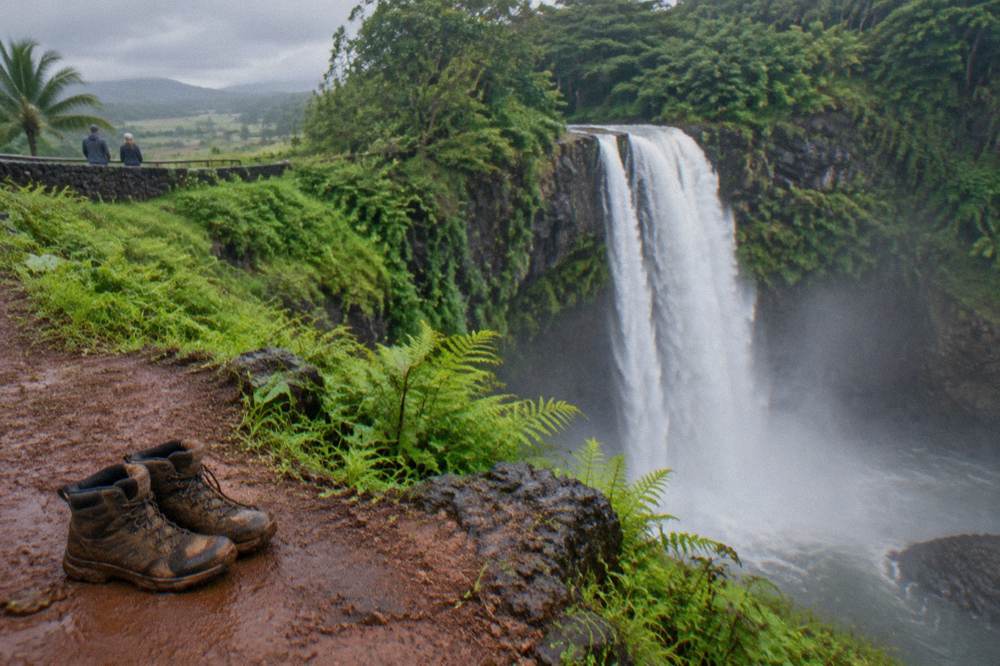
Footwear deserves a specific mention for the wet months. Garden paths, waterfall lookouts and any trail surface turn to red mud quickly after rain, and that mud is slick. Closed-toe shoes with real tread are the standard recommendation on waterfall-hike listings for exactly this reason, and the operators are blunt about it in their requirements. Flip flops belong on the beach, not on the trail.
Does More Rain Mean Bigger Waterfalls?
Yes, waterfalls across Kauai run fuller and more dramatic after sustained rain, which is why the wet months are paradoxically the best season for waterfall tours and waterfall photography, even though they are the worst for snorkeling clarity. The rivers that feed famous falls like Wailua Falls and Opaekaa Falls respond within hours to heavy inland rain. March visitors see thundering falls; by July the same features often thin to a ribbon.
The trade-off is access and safety. Full rivers mean flash-flood risk in the stream crossings that several valley trails involve, and state agencies close areas when conditions warrant. Never cross a rising stream, and check the current DLNR status for any state park or trail before you set out, since the notices change with conditions. The guided waterfall tours on this site handle that judgment for you, which is a large part of what you are paying for: a local operator reading the water and the weather in real time.
This is the strongest argument for a wet-season trip that nobody puts in the brochures. The same March rain that worries a snorkeler is what makes the island look the way it does in photographs, and a waterfalls-and-geysers tour in that season shows the island working at full volume. Pair the tour choice with the Kauai waterfalls guide to pick which falls to see on your own between bookings.
Common Questions About Rain In Kauai
Which Month Is Rainiest In Kauai?
March is the rainiest month at Kauai's official measuring station in Lihue, averaging 5.61 inches of rain, ahead of December at 4.64 inches and November at 4.03 inches. The north shore is wetter than Lihue in every month, so a March trip to Hanalei or Haena will see more rain than these figures suggest.
What Is The Driest Month In Kauai?
July is the driest month at Lihue with 1.75 inches of rain on average, followed closely by June at 1.79 inches. The June through September stretch is also when north shore seas are calmest, making it the best combined window for boat tours and snorkeling.
How Many Inches Of Rain Does Kauai Get A Year?
The official Lihue Airport gauge records an annual normal of 36.22 inches. That number reflects the drier southeast side; the north shore and the island's mountain interior receive far more, which is why Kauai's scenery is so green despite the modest airport figure.
Does It Rain All Day In Kauai?
Usually not. Kauai rain typically arrives in short, intense showers, often overnight or in the morning, with sun between them. Days of steady rain do happen, most often in the wet months or when a weather system stalls, but the normal pattern is bursts rather than downpours from dawn to dusk.
Will Rain Cancel My Helicopter Or Boat Tour?
Only if conditions are unsafe, not merely wet. Helicopter flights cancel for low cloud over the interior mountains, and raft trips cancel for high swell on exposed coastlines. Operators typically offer rescheduling or refunds when they cancel for weather, so book weather-dependent tours early in your trip to leave room to rebook.
When Is The Best Time To Visit Kauai For Good Weather?
June through September offers the least rain and the calmest seas, with July the driest single month. Late April through early June and September are strong shoulder windows with modest rain, warm temperatures and thinner crowds, and the wet season from November to March rewards travelers who prioritize waterfalls and whale watching over guaranteed sun.
Rain shapes Kauai more than any other force, and the team behind Tours In Kauai Hawaii treats it as a planning input rather than a dealbreaker. March is the wettest month in the measured record, July is the driest, and the island's shore-by-shore variation means a smart itinerary can almost always find dry ground somewhere. Pick your month for what you want the island to be doing, waterfalls or glassy seas, and keep a chocolate farm in reserve for the day the sky disagrees.