Kauai Weather By Month
Official rain and temperature normals for Lihue, read month by month, with what they mean for boat trips, helicopter flights and the rest of a Kauai activity list.
Short answer
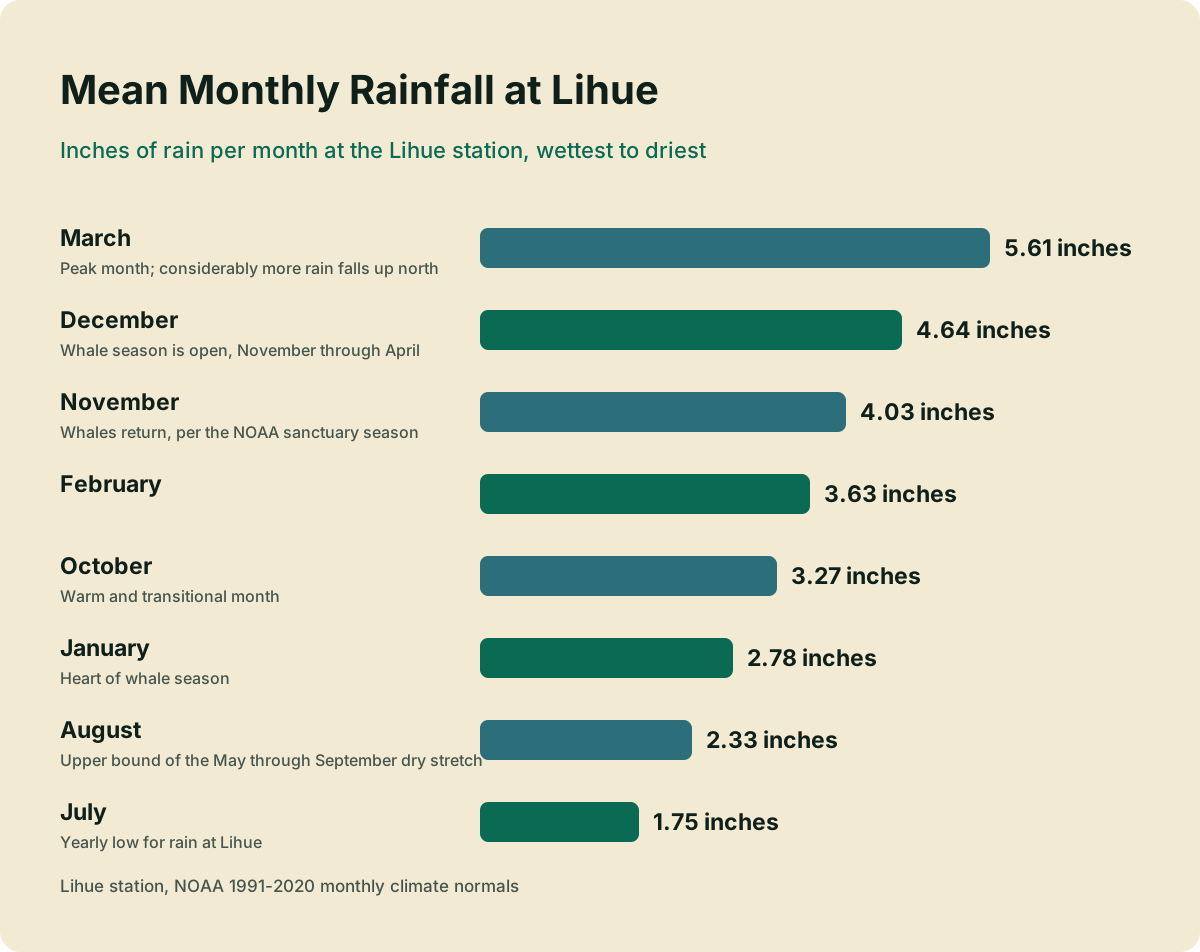
Lihue averages 36.22 inches of rain a year, ranging from 1.75 inches in July to 5.61 inches in March, with daytime highs from about 78 to 85 degrees. The north shore runs far wetter than those southeast numbers. Calm summer seas suit Na Pali raft trips; November to April brings whales and larger swells.
Kauai's weather is the quiet variable behind almost every tour decision on the island. A helicopter flight, a Na Pali raft trip and a Wailua paddle all answer to the same sky, but at different times of year and on different sides of the island. The most useful numbers come from a single official source: the NOAA NCEI 1991-2020 climate normals for the Lihue airport station. Those figures describe the drier southeast corner of the island, not the whole of Kauai, and reading them correctly changes what you book and when. This guide walks the year month by month and connects the numbers to real roster products, from the Na Pali raft snorkel adventure run by Kauai Sea Tours to the Eco Adventure helicopter flight with Blue Hawaiian.
What The Lihue Normals Actually Show
The Lihue station records an annual average of 36.22 inches of rain, a March peak of 5.61 inches, and a July low of 1.75 inches, with mean daily highs between 78.6 and 85.3 degrees Fahrenheit across the year. Winter nights average near 66 degrees, summer nights near 75. Those are real, measured southeast-side numbers, and they understate what falls on the north shore and the mountains by a wide margin.
Read the table as a planning baseline, not a forecast. March is the wettest month at Lihue with 5.61 inches, followed by November at 4.03 inches and December at 4.64 inches. The dry stretch runs May through September, when every month sits at or under 2.33 inches. Temperature barely moves by mainland standards: mean highs range from 78.6 degrees in February to 85.3 in September, and mean lows never drop below 66. Kauai has no cold season, only a wetter and a drier one.
| Month | Mean Rain (in) | Mean High (F) | Mean Low (F) |
|---|---|---|---|
| January | 2.78 | 78.6 | 66.0 |
| February | 3.63 | 78.1 | 66.2 |
| March | 5.61 | 78.5 | 67.3 |
| April | 2.03 | 79.8 | 69.5 |
| May | 2.18 | 81.6 | 70.9 |
| June | 1.79 | 83.3 | 73.4 |
| July | 1.75 | 84.6 | 74.6 |
| August | 2.33 | 85.2 | 75.2 |
| September | 2.18 | 85.3 | 74.8 |
| October | 3.27 | 83.9 | 73.6 |
| November | 4.03 | 81.2 | 71.3 |
| December | 4.64 | 79.1 | 68.6 |
The caveat matters more than the table. Lihue sits on the dry southeast side, and the station's 36.22-inch annual figure would look absurd to anyone in Hanalei or Haena, where orographic lift squeezes far more rain out of the same trade winds. A March day can be sunny in Poipu and pouring on the north shore at the same hour. For a fuller discussion of how this shapes an itinerary, see the companion page on Kauai weather planning.
How Kauai Weather Changes Month By Month
January through March is the wettest stretch at Lihue, with 2.78, 3.63 and 5.61 inches respectively, while June and July are the driest and warmest months at under 1.8 inches of rain and mean highs of 83.3 and 84.6 degrees. The shoulder months, April, May, September and October, split the difference with modest rain and comfortable temperatures.
January opens the year mild and showery, 2.78 inches of rain and a mean high of 78.6 degrees. February looks similar, slightly cooler on average and a touch wetter. March is the outlier of the whole calendar: 5.61 inches at Lihue alone, and considerably more up north. This is also the heart of whale season, and a two-hour Winter Whale Watching trip with Captain J's, from $137 per person with a 4.7 rating from 355 reviews, is a natural January-to-March booking.
April drops sharply to 2.03 inches as the trades settle. May holds near that level at 2.18 inches while highs climb to 81.6, and June and July form the dry core of the year at 1.79 and 1.75 inches. By August, at 85.2 degrees and 2.33 inches, the pattern is classic summer: warm, mostly dry at Lihue, and calm enough along the north shore for the small rafts and snorkel-focused trips. September is technically the warmest month by mean high, 85.3 degrees, on just 2.18 inches of rain.
October, November and December turn progressively wetter: 3.27, 4.03 and 4.64 inches. November and December also mark the return of the whales, per the NOAA sanctuary season of November through April. The wet months are not a reason to skip Kauai; they are a reason to build flexibility into the itinerary and to lean on tours that tolerate a passing shower, a point covered in full in the Kauai rainy day tours guide.
| Period | Lihue Rain Pattern | Best Suited Activities |
|---|---|---|
| Jan-Mar | Wettest quarter, 2.78-5.61 in | Whale watching, helicopter flights, luaus |
| Apr-May | Drying out, 2.03-2.18 in | Kayaking, garden and farm tours |
| Jun-Aug | Driest, 1.75-2.33 in | Na Pali rafts, snorkel trips, surf lessons |
| Sep-Oct | Warm and transitional, 2.18-3.27 in | Boat tours, ziplines, food tours |
| Nov-Dec | Wet again, 4.03-4.64 in | Sunset cruises, helicopters, whale season opens |
A month-by-month read also protects your budget. The driest months carry the most demand for the most weather-sensitive products, particularly small-raft Na Pali trips, and booking ahead for June through August matters more than in February. In the wet quarter the opposite holds: schedules stay looser and same-week bookings are realistic, though holiday weeks in December are the exception.
Which Months Have The Calmest Ocean For Boat Tours
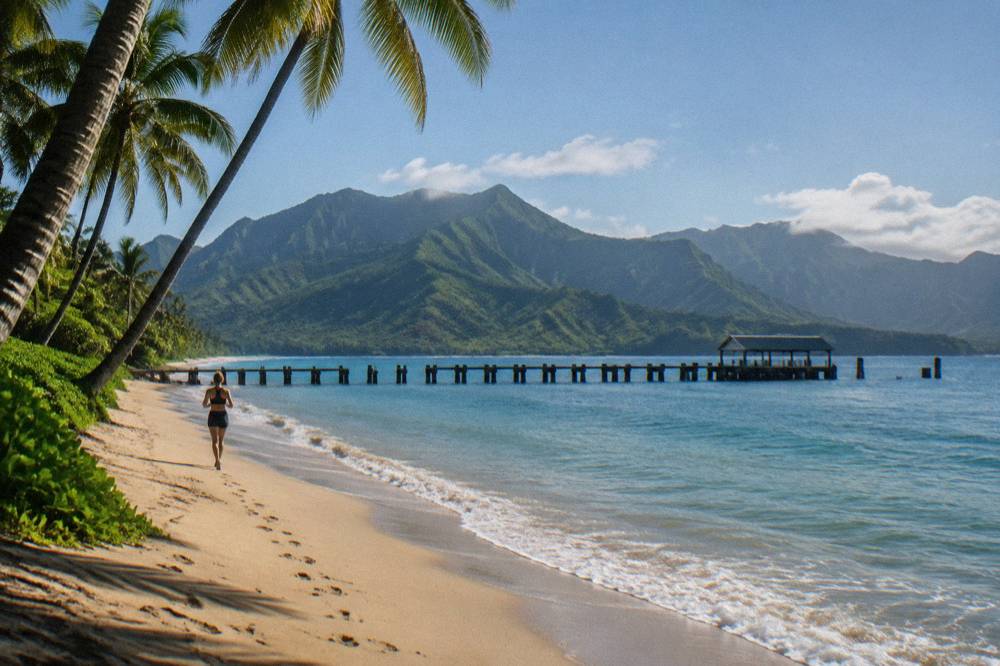
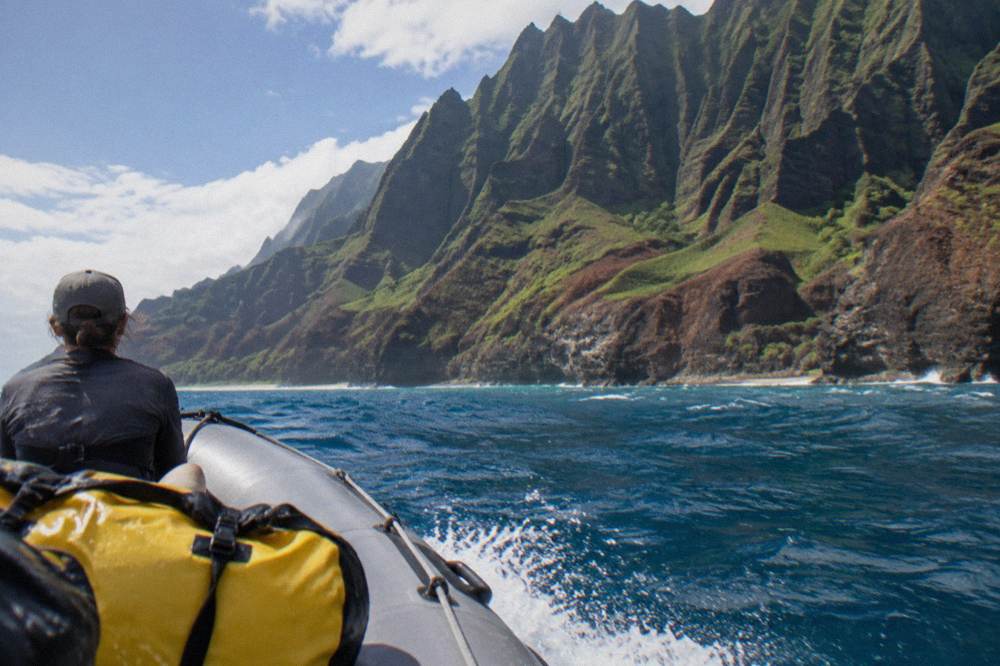
The calm-sea window along Kauai's exposed north and west coasts runs roughly May through September, when north shore swells subside and Na Pali operators run their fullest schedules of rafts, catamarans and snorkel stops. From October through April, larger northwest swells raise cancellation odds, especially for small rafts, and west-side departures become the more reliable choice.
The mechanism is seasonal swell, not rain. Summer trade winds blow consistently but the underlying swell along the north shore is small, and that is when the intimate formats shine. The Na Pali raft snorkel adventure with Kauai Sea Tours, roughly 5 hours 30 minutes, from $217.42 per person and rated 4.8 from 1,656 reviews, is built for exactly this window: sea caves, snorkel time and a coastline best appreciated from a low, nimble hull. Smaller vessels feel the swell more, so the calm season is when they are most comfortable and least likely to cancel.
Larger catamarans take the winter swells in stride better than rigid rafts, and several run year-round from Port Allen on the sheltered west side. The Amelia K day boat tour with Makana Charters, about 5 hours, from $227.13 per person, rated 4.9 from 2,052 reviews, is a stable-format alternative when the raft calendar thins out. Whatever the season, weather calls belong to the operator: flights and boat trips can be changed or cancelled for weather, and the listing states the reschedule terms.
Booking language matters here. These trips are bookable for future dates, and you should confirm the operator's current schedule when you reserve, since harbor and sea conditions shape departure days. A mid-summer booking made in spring still carries the standard advice: watch the marine forecast the day before, take the operator's motion-sickness guidance seriously, and keep one flexible morning in the itinerary in case a departure slides a day.
When Whale Season Fits Into The Calendar
Humpback whales reach Hawaii from November through April, per NOAA's Hawaiian Islands Humpback Whale National Marine Sanctuary, which makes the wetter half of the year the better half for whale-focused bookings. Dedicated whale trips are short, typically around two hours, and priced lower than full Na Pali sailings, from $135.90 to $158.43 per person on this site's roster.
The season overlaps the rainiest months, which reads like a contradiction until you separate sky from sea. Rain does not bother a whale; swell and brown runoff can bother a boat tour. The Winter Whale Watching trip with Captain J's runs about two hours from $137 per person, 4.7 from 355 reviews, and the Whale Watch Cocktail Cruise aboard Imiloa with Kauai Sea Tours runs about two hours from $135.90 per person, 4.7 from 422 reviews. Both are south-side products that avoid the exposed Na Pali run entirely.
No operator guarantees a sighting, and no listing on this site sells one; the honest framing is that November through April is when the odds concentrate, with the sanctuary's own page describing shore and sea viewing in that window. January through March is the peak by common operator wording, though that specific claim sits with the operators rather than the sanctuary page. For the full seasonal picture, including how whale months interact with boat formats, see the whale watching season guide.
Hurricane Season And Storm Awareness
The Central Pacific hurricane season runs June 1 to November 30 as a matter of general climate knowledge, which means Kauai's prime dry months sit inside it. Storms near the island are rare in any given week, but a tropical system can pause boat tours and park access, so flexible cancellation terms and refund-aware booking are simply part of planning a summer or fall trip.
The practical takeaway is not panic, it is reading the fine print before you pay. Operators on this roster, from Holo Holo Charters to Kauai Sea Tours, state their weather and cancellation policies on their listings, and the standard pattern is rescheduling or refunds when the operator calls off a departure. After any significant storm, park and landing access can change quickly: check the current status on the DLNR Important Park Notices page before assuming a trail, lookout or landing is available.
Storm-season awareness also argues for a two-column activity list: weather-dependent items such as rafts and helicopters on one side, weather-tolerant items on the other. Koloa Zipline runs about 3 hours from $169.63 per person, rated 5 from 7,558 reviews, in a forest setting that operates through passing showers. Luau Ka Hikina admission with dinner runs from $183.25 per person, 4.6 from 851 reviews, under cover of its venue. Neither needs a calm ocean, which is exactly the point.
| Weather Risk | Most Affected Products | Practical Hedge |
|---|---|---|
| North swells, Oct-Apr | Small rafts, north shore snorkel | Catamarans from Port Allen, shore snorkel at Poipu |
| Heavy rain events | Hiking tours, waterfall swims, kayak river trips | Helicopter flights after fronts pass, luaus, food tours |
| Tropical systems, Jun-Nov 30 | All boat tours, harbor departures | Book with refund terms, keep a flexible day |
| Windy trade days | Sunset sails, small-craft trips | Larger catamarans, land-based tours |
Which Tours Tolerate The Wet Months Best
Helicopter flights, luaus, food and farm tours and south-shore shore snorkels keep running through Kauai's wetter quarter, because none of them depends on a calm ocean or a dry trailhead. The guided shore snorkel at Poipu, from $119.80 per person with a 4.8 rating from 951 reviews, and the Eco Adventure helicopter from $489 per person, 4.8 from 2,065 reviews, are the two strongest wet-season anchors on the roster.
The logic is geography. Poipu sits on the drier south side, close to Lihue's numbers in character, and a two-hour guided shore snorkel with Z Tourz avoids the open-ocean swell question entirely: if the water is clear and the bay is manageable, the tour runs. Helicopters answer to cloud and wind rather than swell, and Kauai's quick-moving weather means a flight scrubbed in the morning sometimes flies that same afternoon. Waterfalls are also at their best after rain, which turns a wet week into an argument for flying rather than a reason to sulk.
The same reasoning favors the island's farm and food roster in the wet quarter. The Lydgate Farms chocolate tasting runs about 3 hours from $145 per person, rated 4.9 from 1,107 reviews, and the Princeville Botanical Gardens tour with chocolate tasting runs about 3 hours from $126 per person, 4.8 from 884 reviews. Garden walks and tasting rooms shrug off a shower. The rum, chocolate and coffee tours guide covers that cluster in depth.
One caution cuts the other way: brown or murky runoff water after heavy rain can close or degrade snorkeling anywhere on the island, and ocean-safety officials advise waiting after significant rain events. The operator makes the call on the day, and the listing states the terms if water conditions force a cancellation.
Does Rain On One Side Mean Rain Everywhere
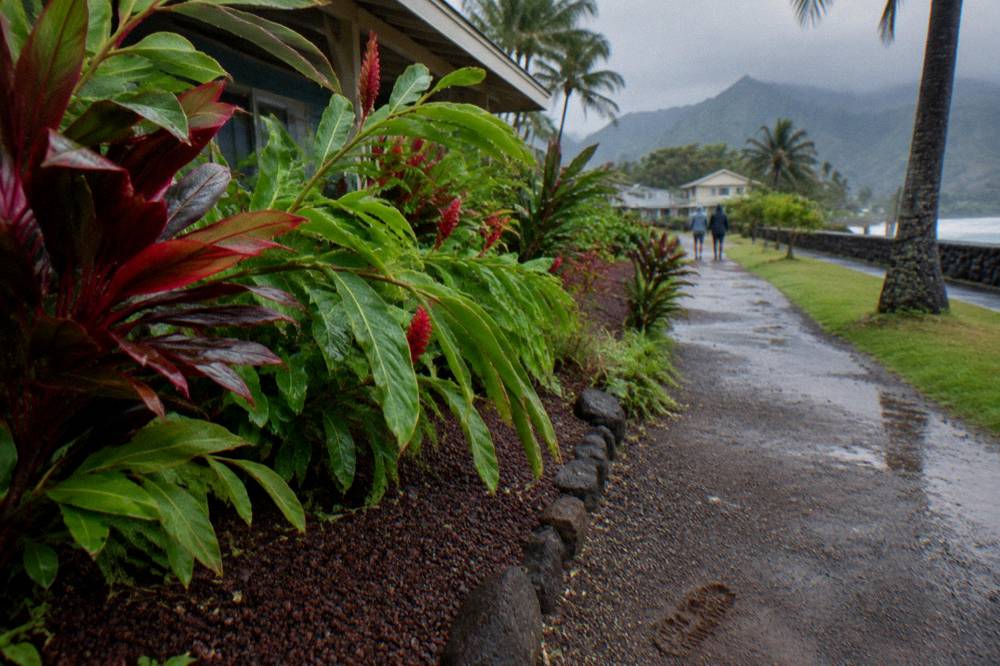
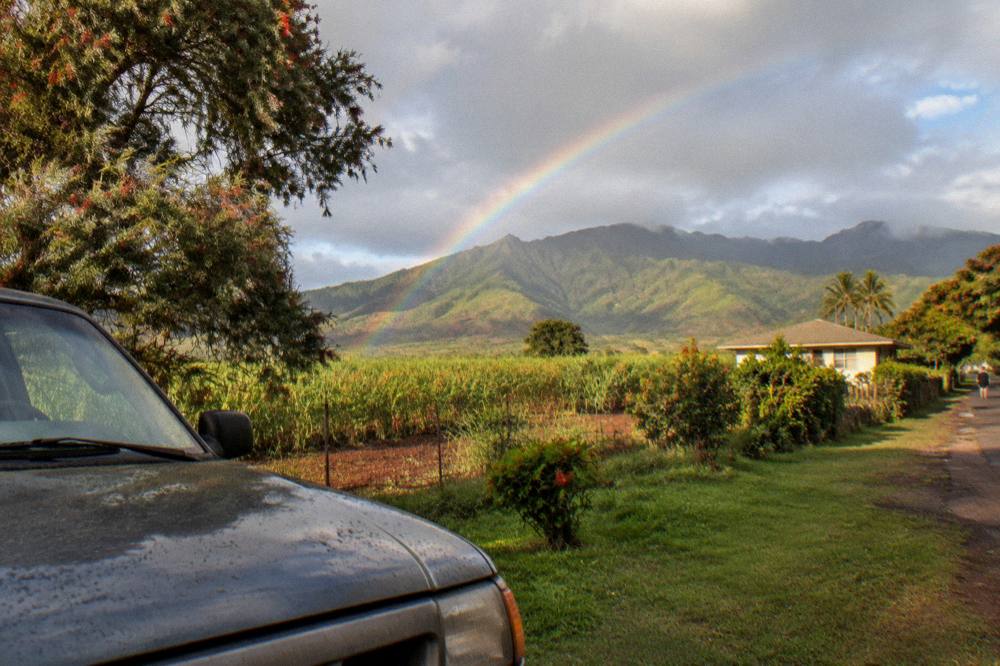
No, and this is the single most useful weather fact on the island: Lihue's 36.22 annual inches describe the dry southeast, while the north shore and the mountain interior receive far more from the same trade winds. A wet morning in Princeville routinely coexists with a dry afternoon in Poipu, so a Kauai plan should be built by side of island, not by day of forecast.
The trade winds push moist air up the island's central mass, and where that air rises, it rains. Hanalei, Haena and the Alakai plateau sit on the receiving end; Poipu, Koloa and Lihue sit in the rain shadow. The practical version for a traveler is a simple shuffle: check the radar in the morning, and if the north shore is gray, drive south for the shore snorkel or the beach day rather than cancelling the day. The best Kauai snorkeling spots guide is organized with exactly this north-south flexibility in mind.
Elevation repeats the pattern vertically. Koke'e country is wetter and cooler than the coast, which is why canyon overlook tours are best booked for the first clear morning rather than left to chance in the afternoon cloud build-up. Helicopter pilots work the same logic in three dimensions, routing around weather that a ground visitor experiences as immovable. Tours In Kauai Hawaii exists partly for this reason: matching the day's weather to the right side of the island is a skill, and the roster is deliberately spread across ocean, air and land so there is always a fit.
Packing And Booking Around The Kauai Calendar
Pack for warm rain regardless of month: a light rain layer, reef-safe sunscreen, quick-dry clothing and a dry bag for boat days, with mean lows never below 66 degrees so cold-weather gear is unnecessary. Book weather-critical tours early for June through August, hold flexibility in November through March, and confirm every operator's current schedule at booking time.
Layering is the whole strategy. Mornings on a raft or a helicopter cabin run cooler than the midday numbers suggest, and a light shell handles both a passing shower and the wind on the water. The what to wear on a Na Pali coast boat tour article carries the detailed kit list for boat days, and the same logic scales down for kayak and hike bookings.
Booking order follows the calendar. For a summer trip, lock the Na Pali raft and the helicopter first, since both are capacity-limited and summer is peak. For a winter trip, lock the luau and any holiday-week dinner cruise first, and leave the boat day one flexible morning. Whatever the month, one habit pays for itself: read the operator's cancellation and weather policy on the listing before paying, and check the current DLNR status for any park, trail or landing your plan depends on.
| Month | Rain (in) | Planning Note |
|---|---|---|
| January | 2.78 | Whale peak approach, book south-side activities |
| February | 3.63 | Coolest month by mean high, 78.1 F |
| March | 5.61 | Wettest month, maximum schedule flexibility |
| April | 2.03 | Sharp drying, good all-round month |
| May | 2.18 | Calm seas arriving, raft season opens up |
| June | 1.79 | Dry and busy, book Na Pali early |
| July | 1.75 | Driest month, peak small-raft window |
| August | 2.33 | Warmest lows, 75.2 F mean |
| September | 2.18 | Warmest mean high, 85.3 F, thinner crowds |
| October | 3.27 | Swell season begins, favor west-side boats |
| November | 4.03 | Whales return, November through April season |
| December | 4.64 | Wet but in demand over holidays |
The month table rewards one last read before you finalize dates. If the trip's centerpiece is a sea-cave raft run, aim the stay at May through September and add a weather-hedge day. If the centerpiece is whales, accept the rain numbers and lean on the south shore. Every other plan sits somewhere between, and Kauai's narrow temperature range means comfort is never the constraint: sky, swell and side of island are.
Common Questions About Kauai Weather By Month
What Is The Rainiest Month In Kauai?
March, by the official Lihue normals: 5.61 inches on average, ahead of December at 4.64 inches and November at 4.03 inches. The north shore receives considerably more than these southeast-side figures in every month.
What Is The Driest Month In Kauai?
July, with 1.75 inches of rain on average at Lihue, closely followed by June at 1.79 inches. Both months also sit in the calm-sea window for Na Pali boat tours.
What Is The Warmest Month In Kauai?
September, with a mean daily high of 85.3 degrees Fahrenheit, just ahead of August at 85.2. The difference between Kauai's warmest and coolest mean highs, 85.3 and 78.1, is only about seven degrees.
When Is Hurricane Season In Kauai?
The Central Pacific hurricane season runs June 1 to November 30 as general climate knowledge. Book weather-dependent tours with refund or reschedule terms and confirm the operator's current schedule when you reserve.
Which Months Are Best For Boat Tours?
May through September, when north shore swells subside and small rafts run their fullest schedules. From October through April, larger catamarans departing from the west side are the steadier choice.
Is Kauai Weather The Same On Both Sides Of The Island?
No. Lihue's 36.22 annual inches describe the drier southeast, while the north shore and interior receive far more rain from the same trade winds. A wet morning in Princeville can coexist with a dry afternoon in Poipu.