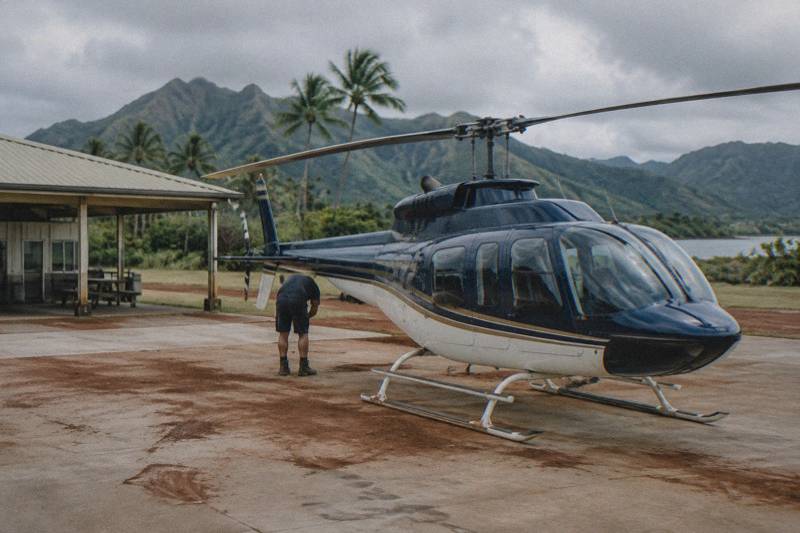
Which Kauai Helicopter Tour Has The Best Safety Record?
No honest ranking of Kauai helicopter operators by safety exists. Here is what you can actually verify before you book: FAA certification, fleet age, weather policies and what the listings themselves state.
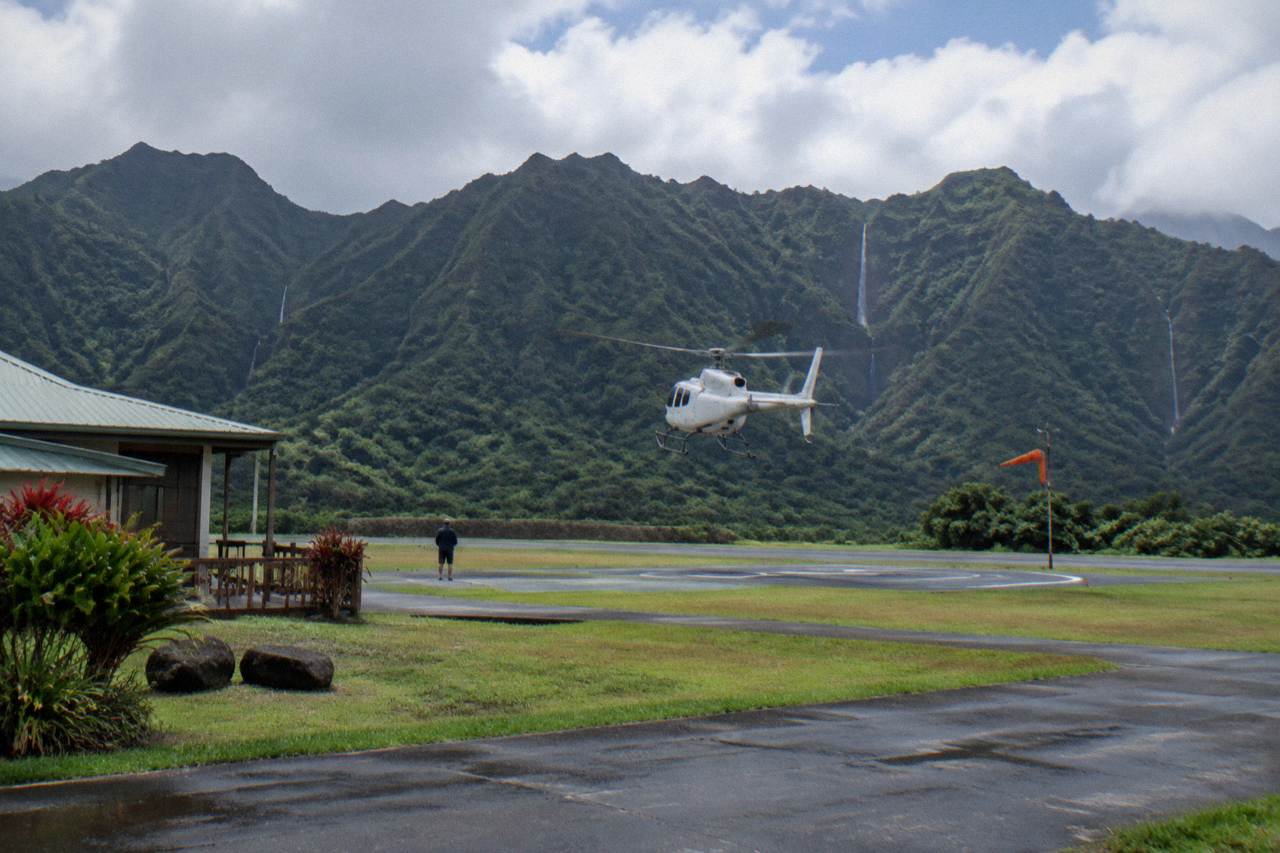
Which Kauai Helicopter Tour Has The Best Safety Record?
No honest answer names a single operator, because no public, comparable safety ranking of Kauai's helicopter companies exists. The FAA certifies operators rather than grading them, review scores measure satisfaction rather than safety, and incident data is not published per operator in a way a traveler could rank. What you can do is verify real signals: certification, aircraft, weather policies and review volume, and this article shows you how. Since a helicopter ride is only one part of staying safe on the island, our guide to the hazards that catch visitors off guard in Kauai covers the ocean, weather, and trailhead risks worth knowing before you go.
The question is a fair one, and it deserves a straight answer rather than a made-up podium. Kauai's helicopter scene is made up of established companies, Safari Helicopters, Blue Hawaiian Helicopters, Air Kauai Helicopters, Jack Harter Helicopters, Mauna Loa Helicopters and Ali'i Kauai Air Tours among them, all of which appear on this site's roster with real listings. Every one of those companies operates under the same federal framework, and none of them publishes a "safety record" number a customer could compare on a chart. Once you're back on the ground and hungry, our guide to where Kauai locals actually eat covers everything from Hanalei food walks to island chocolate farms.
What travelers usually mean by the question is some version of "which flight is least likely to end badly?" The honest response has three parts. First, the things that actually drive helicopter safety on Kauai, weather decisions and pilot judgment, sit with every operator equally and change day to day. Second, the things that differ between operators, aircraft type, doors on or off, departure point, are choices you can weigh yourself. Third, the signals of a well-run operation, FAA Part 135 certification, a maintenance program, clear weather-cancellation terms and years of consistent reviews, are all checkable before you pay. Safety is only half of the decision, so our verdict on whether a Kauai helicopter tour is worth the price walks through the cost, the views, and who should skip the flight altogether.
This article walks through each of those checks. It also points out what looks like a safety signal but is not, and it never ranks the operators, because inventing a ranking would be exactly the kind of fabricated fact this site refuses to print. If you want the broader lay of the land first, the companion guide to the best Kauai helicopter tour covers what each flight actually shows you.
Here are three flights that run the range of formats and prices on the island, from a doors-on waterfall itinerary to a large-fleet eco tour to a doors-off adventure:
Why No Honest Article Can Rank Kauai Operators By Safety?
Because the underlying data does not exist in comparable form. The FAA certifies and inspects operators but does not publish a per-company safety score, the NTSB investigates accidents rather than rating companies, and review platforms capture satisfaction, not maintenance quality or pilot hours. Any numbered "safest operator" list you have seen online was constructed from marketing material, not from data.
Start with what the federal system actually produces. Major Kauai tour operators hold FAA Part 135 certificates, the air-taxi and commuter standard that governs commercial sightseeing flights, and that framework brings scheduled oversight, required crew training and mandated maintenance programs. A 2026 industry overview of Kauai helicopter tours notes that doors-off flights follow strict protocols, including harnesses and secured equipment. That is the floor every certified operator stands on; it is a pass standard, not a leaderboard.
The National Transportation Safety Board steps in after an accident, and its reports are public. But accidents are rare enough, thank goodness, that they cannot meaningfully separate one Kauai operator from another, and a company's NTSB history says nothing about the flight you would take next Tuesday. Meanwhile the numbers travelers do see, the 4.7s and 4.9s on booking listings, measure whether guests enjoyed the ride, found the pilot funny and got good photos. A glowing review pool is evidence of a popular product. It is not evidence of a maintenance bay.
There is one more trap worth naming. "Safest" lists online tend to recycle whichever operators spend the most on marketing. If a blog ranks operators you have never heard of alongside names absent from Kauai's actual roster, treat it as content farming. The checklist approach in the rest of this article is slower but honest.
What FAA Part 135 Certification Actually Means For Your Flight?
Part 135 is the federal operating certificate for on-demand commercial flights, and every legitimate Kauai helicopter tour holds one. It imposes FAA-approved maintenance programs, minimum pilot experience and training requirements, drug and alcohol testing, and operational limits the operator cannot waive for a customer. Certification is verifiable and it is the single hardest safety fact you can check.
In practice, Part 135 means the company's helicopters are maintained on a documented schedule the FAA reviews, pilots recurrently train in the aircraft they fly, and dispatch decisions follow written rules rather than a handshake. For a Kauai traveler this matters in visible ways: a Part 135 operator will cancel or reschedule when cloud cover makes the interior mountains unsafe, and will tell you so without drama, because the certificate they operate under is worth more than any single booking.
A good industry primer on Kauai helicopter operations and the doors-off protocols that come with the certificate standard is maintained at this 2026 Kauai helicopter tours overview, which explains the certification layer in traveler terms. You do not need to read the federal rules themselves; you need to confirm your operator holds the certificate and fly with a company that behaves like it does.
The roster listings on this site, it is worth saying plainly, only carry operators whose flights are sold as certified commercial tours. When you read that the Eco Adventure Helicopter from Blue Hawaiian Helicopters runs about 50 minutes from $489 per person with 4.8 from 2,065 reviews, the safety-relevant part is not the score, it is that this is a large, long-running operator with a deep review history under the same federal rules as everyone else. For a deeper treatment of the oversight system, see the site's guide on Kauai helicopter safety.
What Can You Check Yourself Before You Book A Helicopter Tour?
Five things: Part 135 certification, the operator's own website and accident-free longevity, aircraft type and age, the weather-cancellation policy, and the depth and pattern of guest reviews. Each takes minutes to check and together they tell you more than any third-party ranking could. Certification and policy are facts; the rest are strong circumstantial signals of a well-run company.
None of these checks require inside knowledge. Here is what each one looks like in practice.
| Check | What To Look For | Where To Check |
|---|---|---|
| Certification | FAA Part 135 air carrier certificate, stated or implied by commercial tour status | Operator's website, FAA registry |
| Longevity | Years in operation, consistent listing history, stable fleet | Operator's about page, listing details |
| Aircraft | Named model (A-Star, EC130, MD500), doors-on or doors-off configuration | Listing and operator site |
| Weather policy | Free reschedule or refund when conditions cancel the flight | Cancellation terms on the listing |
| Reviews | Volume in the hundreds plus, spread over years, mentions of safety briefings | Guest reviews on the live listing |
The review column deserves one caution printed in full here rather than repeated later: a small review pool is a small pool. A 5.0 from 24 reviews is a fine product with a young listing, and this site writes it exactly that way rather than calling it "top rated." Volume matters because patterns emerge from it. Guests who mention thorough briefings, harness checks on doors-off flights and pilots who turned back in weather are describing a safety culture from the inside.
Weather policy is the most underrated row. An operator that refunds or free-reschedules when Kauai's clouds close the island's interior has aligned its incentives with yours. One that pressures you into a voucher you cannot use has not.
Doors-On Or Doors-Off: Is One Format Safer Than The Other?
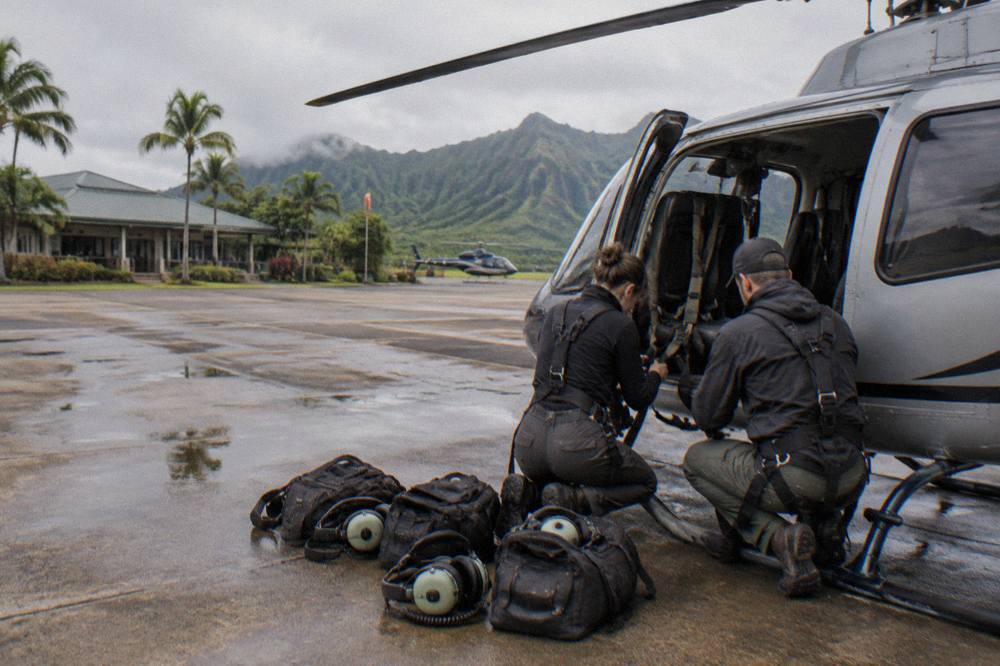
On paper, no: both fly under the same Part 135 rules, often over the same terrain in the same hour. The real differences are operational. Doors-off flights use full harnesses with tethered equipment, stricter loose-item rules, and typically higher minimum ages and weight limits. Doors-on cabins offer redundancy and comfort. Choose by which set of constraints fits you, not by imagined risk.
Doors-off flying is the format that worries nervous passengers most, and it is also the most regulated-feeling experience on the island, in the sense that nothing about it is casual. The 2026 doors-off overview cited earlier notes typical minimum ages around 10, per-seat or group weight limits commonly in the 240 to 285 pound range, and mandatory harnesses and tethers, with no loose items of any kind. Your phone is strapped in or left behind. Your straps are checked by crew before the rotors turn.
On the roster, Air Kauai Helicopters' doors-off flight runs about 50 minutes from $402.09 per person with 4.8 from 545 reviews, and Jack Harter Helicopters' doors-off MD500 flight runs from $460. These are harness-in, four-point-restraint products flown in nimble aircraft, and the reviews consistently describe briefings that leave nothing to interpretation.
Doors-on flights, such as Blue Hawaiian's Eco Adventure or Air Kauai's Ohana tour at $348.62 per person, put you in an enclosed cabin, often with two-way headsets and a more family-friendly feel. Neither format has a safety claim over the other that any data supports. What is true is that doors-off demands more of you as a passenger, and if the answer to "no loose items, full harness, open door" is no, then doors-on is your format and it is an excellent one. The site's doors-off helicopter guide walks through the format in detail.
What Do Weather Cancellations Tell You About An Operator?
A cancellation handled well is a safety system working exactly as designed. Kauai's interior mountains stack clouds and rain even on days the coast is sunny, and the operators worth flying with are the ones that scrub, reschedule free or refund when the ceiling drops. How a company treats your cancelled flight is one of the few safety behaviors you can observe before you are ever airborne.
Kauai's geography drives this. The island's center catches enormous rainfall while Lihue, on the drier southeast side, averages just 36.22 inches a year against far wetter uplands, per NOAA's 1991-2020 climate normals for the Lihue airport station. Translated to flight operations: the departure ramp can be clear while the waterfalls you paid to see sit inside cloud. Pilots make that call constantly, and industry guidance notes that April through October generally brings clearer skies and fewer weather cancellations, with free reschedules and refunds being common practice.
That seasonal note is planning information, not a promise. A flight in any month can be scrubbed, and a company that makes the call early, tells you plainly and rebooks you at no charge is demonstrating the culture you want. Safari Helicopters' Waterfall Safari, a roughly 55-minute flight focused on the island's wettest terrain, from $335.70 per person with 4.8 from 963 reviews, is one of the roster's most-reviewed itineraries in exactly this terrain-dependent category; its long review history includes plenty of guests describing weather calls made and rebookings handled, which is the pattern you want to see.
One practical tip from the listings themselves: book your helicopter early in your trip, not on your last day. A two-day buffer turns a weather cancellation into a reschedule instead of a refund and a missed flight.
What Do The Kauai Listings Actually Say About The Established Operators?
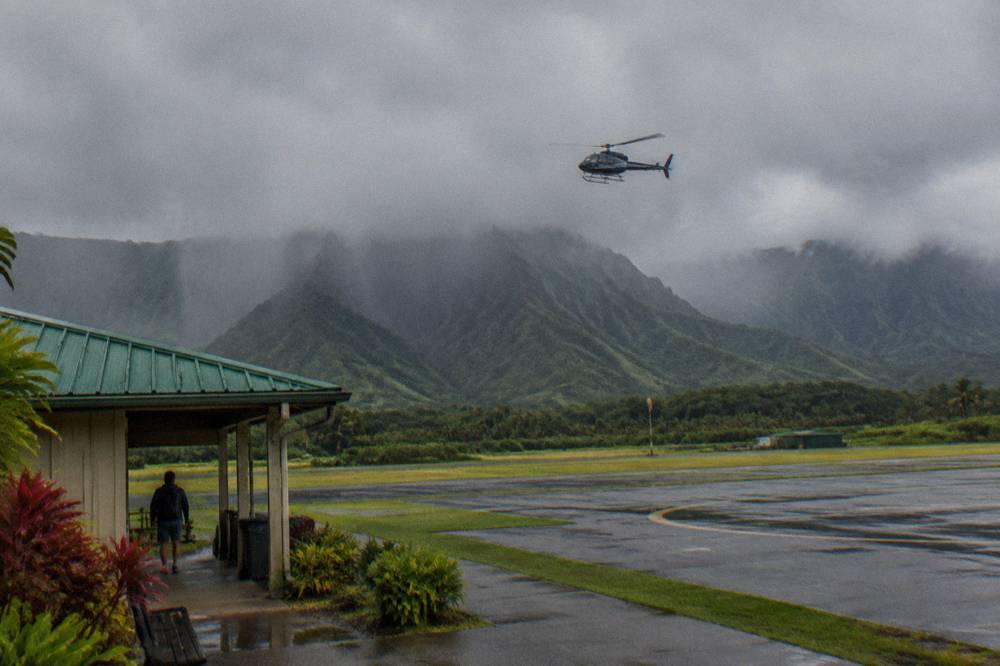
The roster shows a set of long-running companies with large, stable review pools: Safari Helicopters, Blue Hawaiian, Air Kauai, Jack Harter, Mauna Loa and Ali'i Kauai Air Tours, plus fixed-wing operators. None publishes a safety statistic, and none needs to. What the listings evidence is longevity, volume and consistent operations, which are the observable proxies for a well-run company.
Here is how the helicopter category on this site actually reads, with every figure straight from the listings.
| Listing | Operator | Duration | Price From | Rating And Pool |
|---|---|---|---|---|
| Eco Adventure Helicopter | Blue Hawaiian Helicopters | ~50 min | $489 | 4.8 from 2,065 reviews |
| Waterfall Safari Helicopter | Safari Helicopters | ~55 min | $335.70 | 4.8 from 963 reviews |
| Doors-Off Waterfall Flight | Ali'i Kauai Air Tours | ~1 hr 15 min | $425 | 5.0 from 1,794 reviews |
| Air Kauai Doors-Off Flight | Air Kauai Helicopters | ~50 min | $402.09 | 4.8 from 545 reviews |
| Helicopter With Canyon Landing | Safari Helicopters | ~1 hr 30 min | $395.70 | 4.8 from 392 reviews |
| Princeville Departure Helicopter | Blue Hawaiian, Princeville | ~45 min | $579 | 4.9 from 34 reviews |
Read that table the way an auditor would, not a marketer. Five of the six listings carry review pools in the hundreds or thousands, accumulated over years, from guests who were strapped in, briefed, flown and returned. The Princeville departure is a small pool of 34 reviews and this site labels it as one rather than dressing it up. Note too that ratings across every major Kauai operator cluster between 4.7 and 5.0, which tells you the market is mature and the products are consistent; it also tells you star ratings cannot separate anyone on safety, which is the whole point of this article.
The canyon-landing product deserves a mention because it is unusual: a flight that actually lands inside Waimea Canyon terrain. It runs $395.70 from 4.8 across 392 reviews. A landing adds an operational step, and the FAA-certified framework covers it, but it is a fair example of a format choice you might weigh rather than a safety distinction.
One more roster note for context: if your concern is less about safety records and more about whether a small aircraft suits you at all, the fixed-wing flights, such as Wings Over Kauai's island air tour at $155 per person with 4.9 from 1,123 reviews, offer a lower-cost enclosed-cabin alternative covered in the site's airplane versus helicopter comparison.
How Does Kauai's Weather And Terrain Shape Flight Safety?
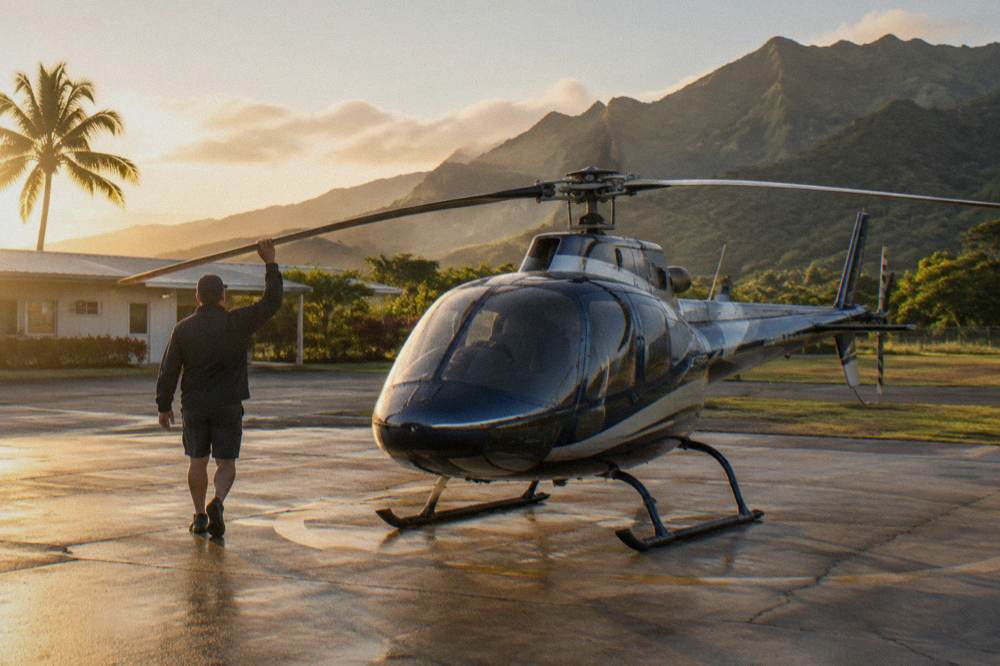
Kauai flies through one of the most dynamic small-aircraft environments anywhere: coastal calm, a rain-soaked interior, and mountain ridges that build their own clouds, sometimes within an hour. Lihue averages 36.22 inches of rain a year while the island's summit interior measures in hundreds of inches. That contrast is why every Kauai operator lives and dies by weather calls.
The numbers come from NOAA's climate normals for the Lihue airport station, where March is the wettest month at 5.61 inches and July the driest at 1.75 inches. But Lihue is the dry-ish southeast corner; the north shore and the interior are far wetter, and the summits far wetter still. A helicopter route from Lihue can cross from sunshine to near-whiteout cloud over the space of a few miles, which is precisely why the waterfall-focused flights are so spectacular and so condition-dependent.
Terrain matters as much as rain. The island's inland valleys are the draw, which means routes intentionally aim at ridgelines and waterfall amphitheaters rather than avoiding them. Pilots flying these routes daily develop local judgment no regulation can substitute for, and that daily familiarity is one reason longevity in the Kauai market is a meaningful signal. After major island weather events in recent years, reporting from island sources noted helicopter operators continuing to fly from Lihue while other visitor activities paused, an illustration of how weather-flexible the format is compared with anything tied to trails, harbors or roads. The same reporting cautions that slots and schedules can tighten after such events, so confirm the operator's current schedule when you book, per the guidance in this island activity-status update.
For seasonal planning at the island level rather than the flight level, the site's Kauai weather by month guide lays out the same NOAA figures month by month.
Is A Higher Price Or A Bigger Operator Any Safer?
No listing supports that leap. Kauai's helicopter prices range from $221 for an 18-minute doors-off hop to $579 for a Princeville departure, and the spread reflects duration, aircraft, doors configuration and exclusivity, not a safety gradient. Every operator on the roster, budget tier and premium tier alike, flies under the same Part 135 certificate framework with the same federal oversight.
Consider the pattern. The Waterfall Safari at $335.70 and the Eco Adventure at $489 sit in the same broad duration class, roughly 50 to 55 minutes of flying, and the gap between them buys aircraft type, cabin experience and operator scale rather than any extra margin of safety; both carry 4.8 ratings from review pools near a thousand or more. The most expensive items on the helicopter roster, the private doors-off products at $425 and the Princeville Blue Hawaiian departure at $579, are priced by exclusivity and departure point. Nothing in the listing data ties any price point to any safety outcome, and nothing could, because the certificates are identical.
What price does correlate with is comfort and format. Doors-off private flights cost more because one party buys the aircraft. Canyon landings cost more because the operation is more complex. If a seller ever implies that paying more buys a safer flight, that is a marketing line, not a fact, and it is worth hearing it that way.
The reverse is also true: the affordable tiers are not risk tiers. Jack Harter's 18-minute doors-off flight at $221 per person, from a 4.8 rating across 16 reviews, a small pool this site names as one, is a shorter itinerary over similar terrain in the same certified system as the premium products.
Which Flight Should You Actually Book If Safety Is Your Top Concern?
Book any certified, well-reviewed operator whose format suits you, depart early in the day and early in your trip, and read the cancellation terms before you pay. On this site's roster, the Waterfall Safari from Safari Helicopters, the Eco Adventure from Blue Hawaiian and Air Kauai's doors-off flight are three long-running options with large review pools, and the right choice among them is a matter of format, not of risk.
Practically, the sequence looks like this. Pick your format first: doors-on cabin if you want the classic enclosed tour with narration, doors-off if you want photographs without glass and accept the harness regime. Then check the three or four listings in that format and compare duration, price and review depth using the table above. Then book a morning departure on a day that is not your last on the island, and read the cancellation terms once, carefully, before you check out. That process, done honestly, does more for your peace of mind than any invented ranking ever could.
If you are still deciding between seeing the coast from the air or the water, the site's comparison of Na Pali by boat or helicopter covers the trade-offs. You can also browse the full Waterfall Safari Helicopter listing to read its terms and guest reviews in full. The publishing team behind Tours In Kauai Hawaii keeps every figure on this page tied to the live listings so you are comparing real products, not marketing copy.
Still weighing whether the Waterfall Safari is the right fit for your trip?
Here, once more, are the three flights this article has used as its examples, spanning the price and format range:
Common Questions About Kauai Helicopter Tour Safety Records
Which Kauai Helicopter Tour Has The Best Safety Record?
No comparable public safety record exists for Kauai's helicopter operators, so no honest answer can name one company. Every operator on this site's roster flies under the same FAA Part 135 certificate framework. The checks you can make yourself are certification, longevity, aircraft, weather-cancellation policy and review depth, all covered in the sections above.
Are doors-off helicopter tours in Kauai safe?
Doors-off tours fly under the same FAA Part 135 rules as doors-on flights, with added requirements: full harnesses, tethered equipment, no loose items, and typically minimum ages around 10 and per-seat weight limits. Air Kauai's doors-off flight, 4.8 from 545 reviews, and Jack Harter's MD500 doors-off product are roster examples of the format.
Do helicopter tours get cancelled for weather in Kauai?
Yes, routinely. Kauai's interior builds cloud even when the coast is sunny, and operators scrub flights when the ceiling drops. Free reschedules or refunds are the standard practice among the major operators, which is why booking early in your trip matters: a cancellation becomes a rebooking instead of a missed flight.
Does a higher rating mean a safer helicopter tour?
No. Listing ratings measure guest satisfaction, not maintenance quality or pilot experience. Kauai's major operators all cluster between 4.7 and 5.0, so ratings cannot separate anyone on safety. Review depth and what guests say about briefings and weather calls are more informative than the star number.
What is the cheapest helicopter tour on Kauai's roster?
The least expensive listing is Jack Harter's 18-minute doors-off flight at $221 per person, 4.8 from 16 reviews, a small pool. Price on the roster reflects duration, aircraft and exclusivity, not a safety gradient; every operator flies under the same certificate framework.
Where do Kauai helicopter tours depart from?
Most depart from Lihue, the island's main airport and its most weather-stable operating base, with a small number of departures from Princeville, such as Blue Hawaiian's Princeville flight at $579 per person. Departure point affects route and price, not the safety framework.