What To Be Careful Of In Kauai?
The honest safety brief for Kauai: ocean hazards by season, flash floods, break-ins at trailheads, wildlife rules and reef etiquette, with the tours that keep first-time visitors out of trouble.
What To Be Careful Of In Kauai?
The four things that genuinely hurt visitors on Kauai are the ocean, flash floods, theft from parked rental cars, and misunderstandings with protected wildlife and reefs. None of these are exotic: nearly every incident traces back to swimming at an unguarded beach, entering a stream trail before checking conditions, leaving valuables visible, or standing on coral or too close to a turtle.
Kauai does not need sensational warnings. It needs specific ones. The island's beaches are mostly unguarded, its most famous hikes follow stream beds that can rise in minutes, and its reef and wildlife are protected by state and federal rules that carry real fines. A little knowledge replaces most of the risk.
The pattern that repeats in local news coverage is a visitor who assumed the conditions they saw at arrival would hold all day. They don't. Conditions here change fast, and the rest of this article is organized around the places where that matters most: the water, the weather, the parking lot, and the animals.
For travelers who want the safest possible introduction to the island's two headline experiences, a guided shore snorkel and a small-group island day trip cover a lot of ground with someone local watching conditions for you.
The three listings above span the range most first-timers want: a guided Poipu shore snorkel from $119.80 per person, the Amelia K day boat along the Na Pali coast from $227.13 per person, and a small-group island day trip from $199 per person. All three put a professional between you and the day's judgment calls, which is most of what safety on Kauai actually is.
Is The Ocean In Kauai Dangerous?
Yes, and it is the island's most consistent hazard. Most Kauai beaches have no lifeguard, and the dangers are seasonal and invisible from the sand: strong shorebreak, current channels, and winter surf arriving on the north and west shores from October through April. Swimming at a guarded beach during guarded hours removes most of the risk in one decision.
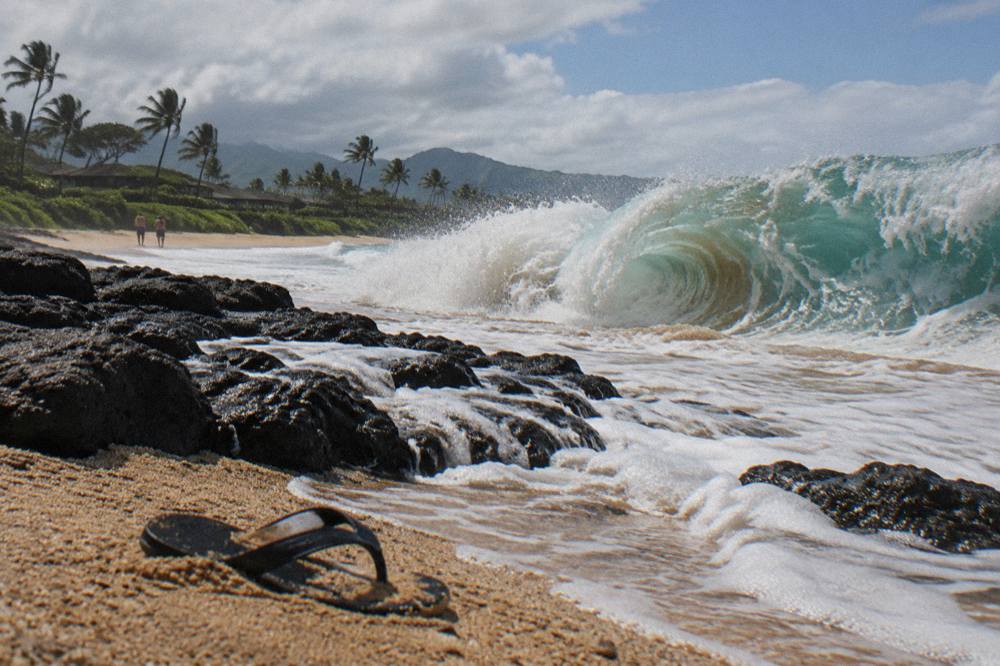
The island's surf calendar matters more than most visitors expect. Large north and northwest swells typically run October through April, and they turn summer-calm north shore beaches like Hanalei and Ke'e into hazardous shorebreak. In the same months the south shore settles down, which is why Poipu is the winter default for families. From May through September that flips: the north shore goes glassy and the south shore picks up surf. There is no month when every coast is calm, only a month when one coast is calm, and the trick is knowing which.
Shorebreak deserves its own sentence. Waves that collapse directly onto shallow sand can drive a swimmer head-first into the bottom, and it is the mechanism behind many of Hawaii's serious beach injuries, including at beaches that look friendly. If the waves are dumping rather than spilling, stay out of the water entirely, and enter the water feet first the first time every time.
Two more quiet hazards: current and clarity. Channels near reef gaps and river mouths can pull hard even on flat days, so swim where others swim and ask a lifeguard when one is present. And after any heavy rain, island streams send murky runoff into the ocean; the standard health advice for brown or cloudy water is to stay out of it, both for cleanliness and because murk hides the bottom you would normally see. On a guided trip the operator makes these calls. The Poipu guided shore snorkel from $119.80 per person, rated 4.8 across 951 reviews, begins with a briefing on conditions, entry and exit points, and what not to touch, which is exactly the orientation an unguarded beach will not give you.
If a boat is more your speed, the operator makes the go or no-go call on the whole day: Na Pali trips cancel or reroute for swell, and the captain's briefing covers where you may swim. Operators never guarantee sea conditions, and no listing on this island sells a guaranteed calm day, because none can.
| Hazard | What it looks like | When and where it peaks | The habit that avoids it |
|---|---|---|---|
| Shorebreak | Waves dumping straight onto sand | North and west shores, Oct to Apr | Swim at guarded beaches; enter feet first |
| Channel current | Flat surface, strong pull seaward | Near reef gaps and river mouths | Ask lifeguards; swim near others |
| Winter surf | Large swells, closed beaches | North shore, Oct to Apr | Shift south to Poipu in winter |
| Brown water | Murky, cloudy runoff after rain | After any heavy rain | Wait for clear water before swimming |
| No lifeguard | Empty beach, no tower | Most beaches, all year | Choose beaches with towers when possible |
What About Flash Floods And Sudden Rain?
Flash floods are Kauai's most underestimated land hazard. The island's best hikes follow stream valleys, and a storm far inland, often invisible from the trailhead, can send a wall of water down a normally ankle-deep stream. Never cross a rising stream, and never camp or linger in a stream bed, even under blue sky overhead.
Kauai's rain is famously uneven. The Lihue weather station records 5.61 inches in March, its wettest month, against 1.75 inches in July, its driest, with 36.22 inches across a typical year, and that is the dry southeast corner; the mountains and the north shore take far more. The practical consequence is that a sunny morning in Poipu tells you almost nothing about the weather two miles up the Wailua valley, and nothing at all about the interior.
The rule local agencies repeat is simple: if you can hear or see flood water coming, or a stream has risen since you crossed it, wait it out. Rising water usually recedes, and hikers are rescued every year because they crossed back through a flooded stream rather than waiting an hour. Check the National Weather Service forecast for a flash flood watch before any valley or falls hike, and check the state's current park notices on the DLNR Important Park Notices page before you drive to any trailhead, because park and trail access changes and the official page is the source of truth.
That access point matters for planning. Some of the island's best-known falls hikes have been closed or restricted at various times, and commercial operators adjust their routes around current conditions. A guided kayak and hike outing, for example the guided hike and waterfall swim trip from $93.19 per person rated 4.8 across 79 reviews, only runs where access and conditions allow, and the guide carries the judgment call for you.
Two planning habits finish the job. Build a rain alternative into every hiking day, because the island's rainy day options run from chocolate farm tastings at Lydgate Farms, $145 per person with a 4.9 rating across 1,107 reviews, to a Hanalei walking food tour from $135.50 per person. And if a stream crossing is on your route, check the weather yourself at dawn rather than trusting yesterday's forecast.
Is Theft From Rental Cars Really A Problem?
Yes. Break-ins at trailheads and beach parks are the island's most common crime against visitors, and rental cars are targeted precisely because thieves know the owner is gone for hours. The prevention is total: leave nothing in the car, including the trunk, and carry valuables or check them where you are staying.
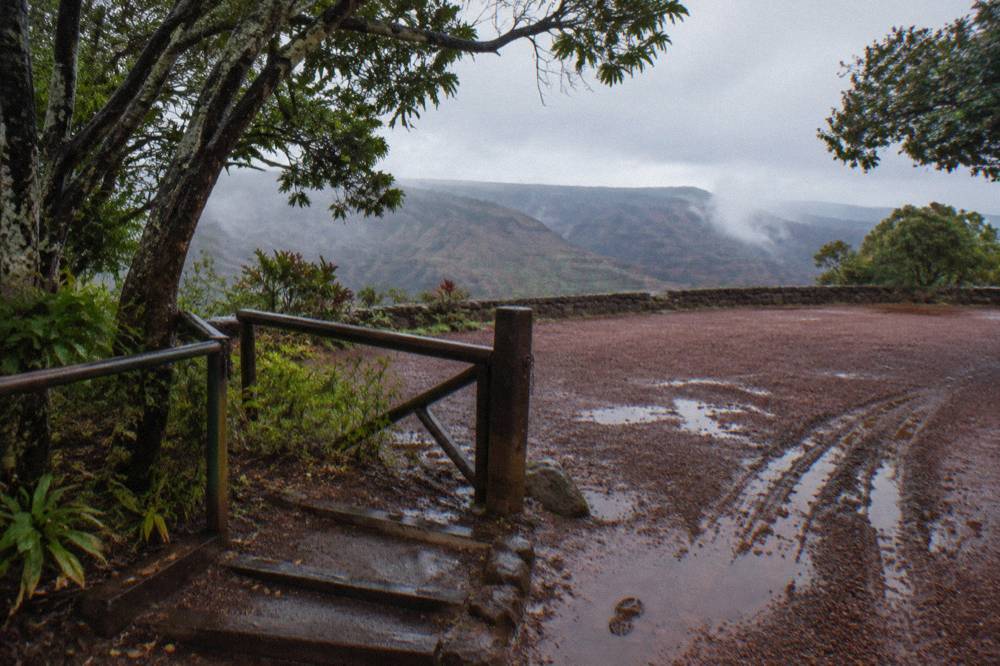
The mechanism is well understood locally. A car sits at a remote lookout for three hours while its occupants hike; a window costs a thief seconds. Bags, cameras, wallets and passports are the standard losses, and the standard victim believed the trunk was safe. It is not, because a thief can watch you load it.
The countermeasures cost nothing. Take valuables with you or leave them at your accommodation. If you must leave anything, stow it before you park, not after, so no one watches you transfer bags into the trunk. Leave the cabin visibly empty, doors unlocked is advice some locals give to avoid a broken window for nothing, but at minimum leave nothing worth a window. And prefer parking areas with other people over the deserted pull-off, even if the view is marginally better.
One reservation-system trap sits alongside the theft problem. At Haena State Park on the north shore, parking outside the reserved lots draws tickets of $200 or more, so the reservation system and the theft problem interact: book your slot properly through the official system, where shuttle plus entry runs roughly $40 to $45 for ages 16 and up, parking plus entry is $20 per car per timeslot plus $5 per person entry, and Hawaii residents with state ID enter free.
Organized tours sidestep the whole category. A small-group island day trip from $199 per person, or any private guided tour, means your belongings sit with a driver or stay with the group rather than in an empty car at a lookout, which is one of the quieter arguments for guided days.
What Wildlife Rules Catch Visitors Out?
The rules people break by accident are touching or chasing sea turtles and Hawaiian monk seals, standing or walking on coral, and approaching whales too closely by boat or drone. Turtles need roughly ten feet of space, monk seals need much more and are federally protected, and all of it carries fines. Coral is a living animal, and one footstep can kill years of growth.
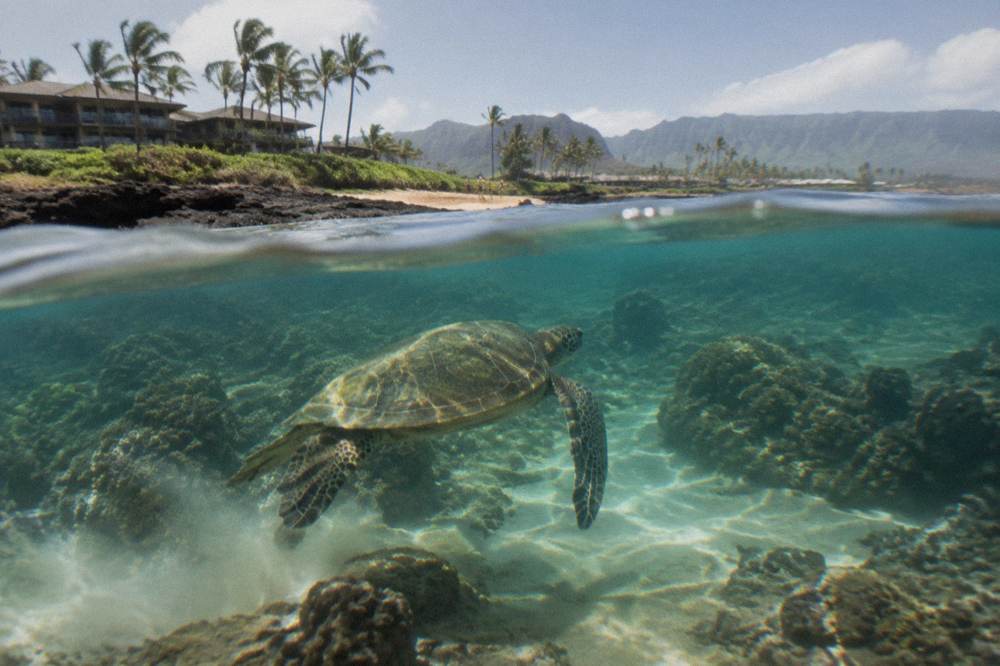
Turtles are the biggest accidental offense, because they are everywhere and they look unbothered. Give green sea turtles space in the water and on the beach, never touch or ride one, and never block its path back to the water. Hawaiian monk seals, which haul out on Kauai beaches more than anywhere else in the main islands, are protected under federal law; keep well back, keep dogs away, and let a resting seal rest. Both species are common sights on the south shore, which is another reason the guided Poipu snorkel earns its 4.8 rating across 951 reviews: the guide sets the distance before the turtle appears, not after.
Coral is the second silent victim. Reef-safe sunscreen is now the expected standard in Hawaii, with sunscreens containing oxybenzone and octinoxate banned under state law, so buy mineral-based before you swim. Beyond sunscreen, never stand on coral even in shallow water, float over it, and enter the water in sandy gaps. Fins, hands and anchors all do damage that takes decades to recover.
Whales have their own federal rulebook. NOAA's Hawaiian Islands Humpback Whale National Marine Sanctuary notes that humpbacks are in island waters from November through April, and federal law keeps boats and especially drones at a distance from them. On a licensed whale watching trip, like the winter whale watching run from $137 per person rated 4.7 across 355 reviews, the crew manages the legal approach distances; from a rented kayak or a drone, you are the one responsible, and most people guess wrong.
| Protected thing | The rule | Why it exists | Typical fine exposure |
|---|---|---|---|
| Green sea turtles | Do not touch, chase or ride; give space | Federal protection, stress harms them | Federal fines and citations |
| Hawaiian monk seals | Keep far back, on land and in water | Among the rarest seals on earth | Federal penalties are severe |
| Coral reef | Never stand on or touch coral | Coral is alive and slow-growing | State damage citations |
| Humpback whales | Keep distance by boat, no drone approach | Federal sanctuary and marine mammal law | Federal fines, up to very large sums |
| Reef fish | No touching, no fish feeding | Feeding disrupts reef ecology | State rules at marine areas |
One nuance worth knowing: Niihau and its neighboring islet Lehua, the destination of several long snorkel expeditions from Kauai, carry their own restrictions. Lehua is a state-designated seabird sanctuary where access is restricted to below the high water mark and commercial landing is prohibited, so every Niihau-area trip is a snorkel-from-the-boat day, never a beach day on the islet.
Is It Safe To Hike On Kauai?
Hiking on Kauai is safe for prepared walkers and genuinely risky for unprepared ones, and the difference is almost entirely information. Trails here combine mud, root ladders, stream crossings and cliff exposure, often on the same route. Check the official trail status, start early, and turn back when conditions change rather than pushing to a viewpoint.
The honest framing is that Kauai's trails are not groomed. Even popular routes hold slippery red mud, and the coastal trails hold narrow sections with drop-offs. Footwear with grip beats flip-flops on every trail on the island, and trekking poles help on the steep descents, which are where most injuries happen, not the climbs.
Access is the moving part. The headline trails sit inside state parks, and park status can change, so the DLNR notices page is a required stop before any hike here. Where a trail is accessible only through a reservation system, book the slot before you drive, and where a trail requires a permit beyond a certain point, respect the boundary: DLNR states plainly that anyone proceeding beyond Hanakapi'ai on the Kalalau route must hold a valid camping permit, and the full trail runs 11 miles one way, a two-day commitment rather than a day hike.
For visitors who want the waterfalls without the homework, guided hiking is the middle path. A guided hike with waterfall swim from $93.19 per person, or the private waterfall hike and swim in Lihue also from $93.19 per person rated 4.9 across 121 reviews, puts someone who knows the route, the weather signs and the current access rules in front of the group.
If your hiking appetite is really a scenery appetite, the aerial option deserves a mention: fixed-wing tours such as the Wings Over Kauai air tour from $155 per person, rated 4.9 across 1,123 reviews, show the waterfalls and the backcountry valleys with no trailhead risk at all, and helicopter flights do the same from above.
Are Boat Tours And Ocean Activities Safe For Beginners?
Yes, with the right trip matching. Kauai's licensed operators cancel freely for weather, which is the safety system working, and the main risks for beginners are seasickness and choosing a small raft in a season when the swell is up. Larger catamarans in summer and raft trips in calm conditions are the beginner-friendly ends of the range.
The matching matters more than the operator. A rigid-hull zodiac ride along the Na Pali coast is a thrill in flat water and a pounding in a swell, so travelers who are unsure of their sea legs should favor bigger catamarans and summer dates, and should read the operator's own guidance on who each trip suits. The Amelia K day boat tour, from $227.13 per person and rated 4.9 across 2,052 reviews, runs on a larger vessel that handles mixed company well, and snorkel stops are conditional on conditions.
Seasickness deserves planning rather than bravado. Take medication the night before and again the morning of, stay on deck, watch the horizon, and book morning departures, when the wind is usually lighter, a point worth reading in full in the morning versus afternoon comparison. Operators report calmer seas on average before midday, and the first departures of the day are the ones cautious travelers take.
Beginners nervous about the open ocean have a genuine alternative: shore snorkeling. A guided shore snorkel in Poipu, from $119.80 per person, puts you in calm, shallow, guide-supervised water with a briefing first, and it is the natural first step before any boat day. The site's Kauai snorkeling guide covers which spots suit beginners by season.
The same matching logic applies to surf lessons. Kauai's south shore breaks gently enough for first-timers, and a Poipu Beach surf lesson from $93.19 per person, rated 4.9 across 414 reviews, keeps a instructor beside you through the whole session. Surf etiquette, where to fall, and how to handle the board in shorebreak are all taught before the first wave.
What Should You Know About Driving And Remote Areas?
Kauai's road risks are narrow bridges, one-lane stretches on the north shore, and the temptation to cross flooded fords, plus roaming chickens and the occasional pig at dusk. Drive slowly on the highway to Hanalei, yield at one-lane bridges, and never drive through standing water of unknown depth.
The island has essentially one road around most of its perimeter, and the north shore section is a chain of one-lane bridges where the local convention is that the side with five or more cars goes first. It is courteous, it works, and rushing it is how rental cars meet guardrails. After dark, slow down for chickens, cats and pigs, which are plentiful and unbothered by traffic law.
Flooded roads are the serious item. The Hanalei river and its bridges flood in heavy rain, and the county closes the crossing when it does; a closure means a closure, not a challenge. The same rule as the trails applies: wait. Water depth is invisible from a driver's seat, and currents strong enough to move a car run in water that looks shallow.
Remote beaches add a rescue-distance problem. Places like Polihale sit at the end of long unpull-off roads far from help, and part of the year the surf there is violent. Treat any beach without people and without a tower as a look-don't-swim beach, whatever the sand looks like.
How Do You Put It All Together Without Panic?
Plan for conditions, not against them. Pick guarded beaches and guided activities on your first days, check weather and park status each morning, leave nothing in the car, keep ten feet from turtles and more from seals, and let operators make the weather calls on the water. That short list prevents the overwhelming majority of what goes wrong on this island.
The tone to aim for is respect without fear. Millions of visits happen here each year without incident, and most incidents trace to a skipped check rather than bad luck. The visitors who thrive are the ones who treat the island as a place with its own rules: ocean rules that change by season, rain rules that change by the hour, and wildlife rules that exist because the animals have nowhere else to go.
A sensible first-two-days plan looks like this: day one, a guided shore snorkel or surf lesson on the south shore with a guide handling conditions; day two, a small-group island day trip or a guided waterfall hike with someone who knows the current access picture. Both days build the island literacy you need to self-direct the rest of the week safely.
For the deeper comparisons once you have your footing, this site's guides to Kauai with kids and the general best time to visit carry the seasonal detail, and the full safety picture for the skies lives in the helicopter safety guide. The short version of every page is the same: on Tours In Kauai Hawaii, check conditions, book with licensed operators, and the island gives back everything you put in.
Common Questions About Kauai Safety
What To Be Careful Of In Kauai?
The main hazards are the ocean, flash floods, theft from rental cars, and breaking wildlife rules. Swim at guarded beaches, never cross a rising stream, leave nothing visible in your parked car, and give turtles, seals, coral and whales the space the law requires.
What Is The Most Dangerous Beach On Kauai?
There is no single most dangerous beach, because the danger rotates with the season. North and west shore beaches take violent surf from October through April, while the south shore picks up surf in summer. Unlifeguarded beaches at any time of year carry the most risk, so swim where a tower is staffed.
Can You Swim At Kauai Beaches In Winter?
Yes, on the south shore. Winter's large swells hit the north and west shores from October through April, so the seasonal default flips families to Poipu and the south side, where conditions are typically calmer then. Check the daily surf report and lifeguard flags before entering any water.
Are There Sharks In Kauai Waters?
Yes, sharks live in all Hawaiian waters, but encounters are rare and bites rarer still. The practical precautions are avoiding murky water after heavy rain, avoiding stream mouths, not swimming at dawn and dusk alone, and staying out of the water if fish or birds are behaving erratically.
Is It Safe To Leave Things In The Trunk At Trailheads?
No. Trailhead break-ins target rental cars, and trunks are watched as you load them. Leave valuables at your accommodation, stow anything you must carry before you park, and keep the car cabin visibly empty on every hike and beach stop.
Do You Need Reef-Safe Sunscreen In Kauai?
Yes. Hawaii state law bans sunscreens containing oxybenzone and octinoxate, so bring or buy mineral-based sunscreen before swimming anywhere on the island. Beyond the law, never stand on coral and give sea turtles and monk seals plenty of space in and out of the water.