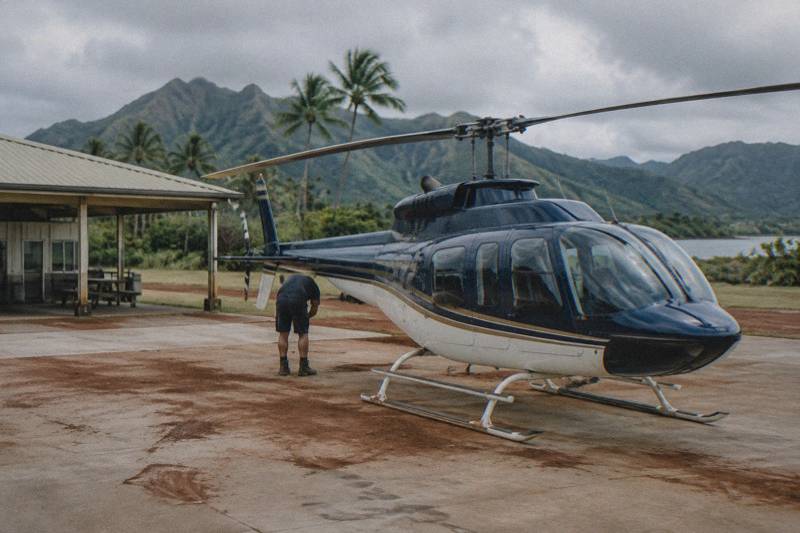
Is It Better To Do A Helicopter Tour In Kauai In The Morning Or Afternoon?
A plain-language comparison of morning and afternoon Kauai helicopter flights: clouds, wind, lighting, cancellations and how to pick your departure window.
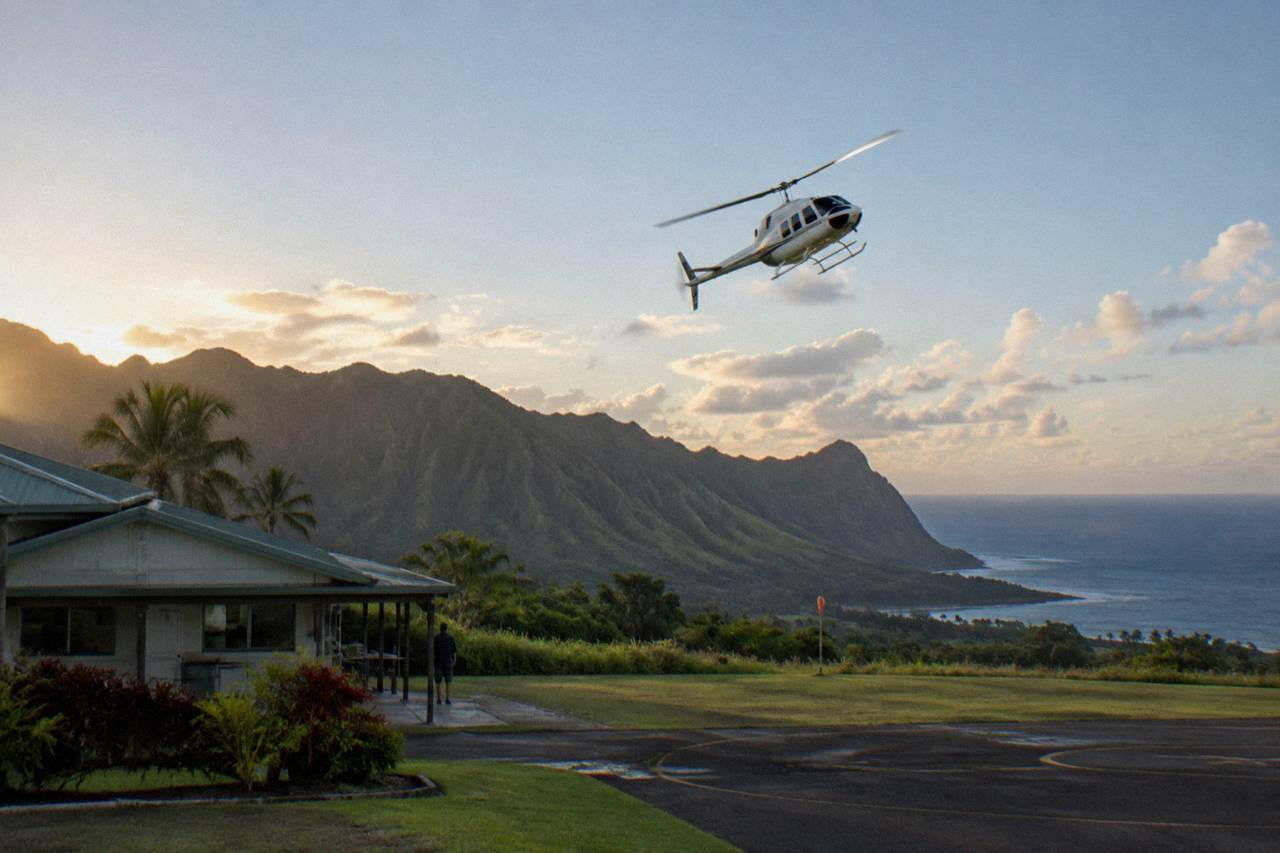
Kauai is the wettest of the main Hawaiian Islands, and its interior ridges make their own weather every single day. That single fact drives almost every honest answer about flight timing here: the island tends to start the morning with clearer air over the mountains and builds clouds, wind and scattered showers as the day heats up. The tendency is strong enough that most operators schedule their fullest rosters early, but it is a tendency, not a promise, and a bright morning can turn to mist over Waiale'ale while a rainy morning can open into a sparkling afternoon.
The practical answer is that morning is the better bet for most travelers, with two honest caveats. First, no operator guarantees clear weather at any hour; flights change or cancel for weather year-round, and reschedules are routine. Second, access conditions on the island matter as much as the sky: state parks and lookouts have seen closures and restrictions recently, so check the current DLNR status before you plan any day around a specific view. This article compares the two windows fact by fact, so you can book the slot that fits your trip instead of a rule of thumb.
Is It Better To Do A Helicopter Tour In Kauai In The Morning Or Afternoon?
Morning is the better choice for most Kauai helicopter flights. The island's cloud build-up usually intensifies through the day, so early departures more often see open ridges and waterfalls before the interior fills in, and the air is typically smoother before afternoon heating stirs up the wind. Afternoon flights are still very worthwhile, and the light on the west side can be beautiful, but odds favor the morning.
That is the short version. The longer version starts with how Kauai's landscape manufactures its own clouds. The island's central massif forces moist ocean air upward, and the sun drives that process harder after mid-morning. Clouds that hug the peaks at dawn grow taller and denser through the afternoon, and the famous wet spots, the Alaka'i wilderness and the Waiale'ale crater rim, are the first to gray out. A helicopter can fly around and even under some of that, but it cannot remove it.
Wind follows a similar curve. Heating over land generates local air movement, and afternoon breezes on Kauai are typically stronger and gustier than the calm that often sits over the island at sunrise. For a passenger, that shows up as a bumpier cabin over the ridges in the afternoon and, at the margins, a higher chance the operator reroutes a flight or pushes it to another day. Operators are explicit that all flights are weather-dependent, and none promises a smooth ride or a clear view at any hour.
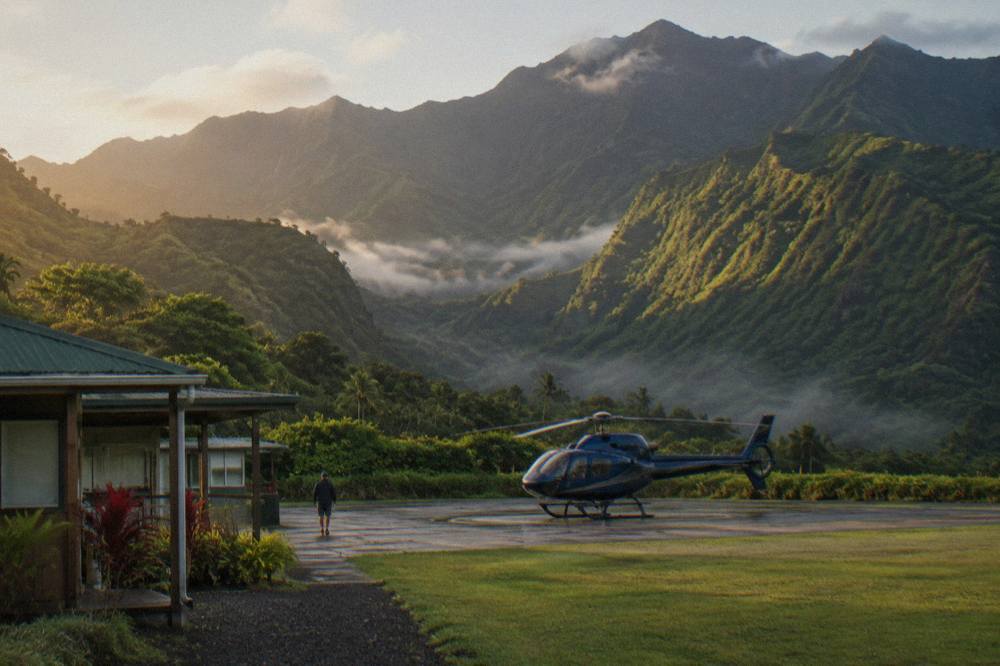
The roster backs up the morning bias in a quiet way: the largest Kauai flight operators stack their first departures close to sunrise, because that is when their own pilots most want to be in the air. Blue Hawaiian Helicopters' Eco Adventure Helicopter, a roughly 50-minute circle-island flight rated 4.8 from 2,065 reviews and priced from $489 per person, runs multiple departures daily, and its earliest slots are routinely the first to sell out for exactly the reasons above. You can see the full field in the site's best Kauai helicopter tour comparison, which includes doors-on and doors-off options side by side.
If you already know you want the earliest workable departure, these three flights cover the common cases: a large-operator doors-on standard, a private doors-off waterfall flight, and a lower-priced waterfall-focused option.
One more framing point before the detail. Morning versus afternoon is a question about odds, not a guarantee. The site's overall helicopter tour cost and value guide makes the same point about pricing: the decision that matters most is which flight you book at all, and the departure window refines it.
Why Mornings Usually Have The Calmer Air
Overnight, Kauai's air settles. Without solar heating, clouds over the interior tend to thin and winds drop, so the first flights of the day more often find smooth air and open valleys. As the sun climbs, thermals build, clouds stack up against the ridges and gusts return, which is why the calmest cabin and the clearest crater views usually belong to the earliest departures.
The mechanics are simple enough to be useful on any island with high terrain. Sunlight heats the land faster than the surrounding ocean, warm air rises, and rising air cools, condenses and forms cloud. On Kauai that engine switches on within a couple of hours of sunrise and runs hardest through mid-afternoon. Pilots describe the result in terms of a daily cycle rather than random luck: thin morning cloud, growing midday cloud, and a peak of cumulus activity in the afternoon that can bury the very summits people fly to see.
The measured rainfall record tells the same story at the monthly scale. Lihue, on the island's drier southeast side, averages 5.61 inches of rain in March, its wettest month, against 1.75 inches in July, its driest, according to the NOAA NCEI 1991-2020 climate normals for the Lihue Airport station (data: NOAA NCEI monthly normals). The north shore and the mountain interior are far wetter than Lihue, but the pattern holds everywhere: winter and early spring bring more cloud and more flight shuffling, and summer mornings are the most reliable window on the calendar.
For passengers sensitive to motion, the morning advantage is doubled. Calmer air means a calmer cabin, and a calmer cabin means the doors-off flights, where you fly harnessed with the wind in the cabin, feel more comfortable. Ali'i Kauai Air Tours' Private Doors-Off Waterfall Flight, rated 5.0 from 1,794 reviews and priced from $425 per person, is the kind of product where booking the first departure of the day makes a genuine difference to how the ride feels. Calm mornings matter on the water as well, and this guide to picking the right Kauai boat tour explains how ocean conditions and your own priorities shape which trip fits best.
What Afternoon Flights Do Better
Afternoon departures offer warmer, lower-angle light that flatters the west-side canyons and the Na Pali cliffs, easier scheduling after a slow morning, and sometimes last-seat availability when early flights are full. The trade is a higher chance of cloud over the wet interior and bumpier air over the ridges, so afternoons suit flexible travelers and photographers more than first-time visitors set on the crater.
Start with the light. Kauai's hero scenery faces every direction, and the sun's angle changes what you get. In the morning the light comes up from the east over Wailua and the north shore; by late afternoon it rakes across Waimea Canyon from the west, deepening the reds and oranges of the gorge, and lights the Na Pali cliffs from seaward, which many photographers prefer. If your goal is canyon color rather than the wet interior's waterfalls, the afternoon argument is real, not a consolation prize.
Scheduling is the second advantage. A 9 a.m. flight means a wake-up call well before dawn if you are staying in Princeville and departing from Lihue, where most Kauai helicopter operators are based. An early-afternoon departure lets you have a normal breakfast, drive south unhurried and still fly the same route. Families with small children and travelers adjusting from mainland time zones often find the afternoon slot simply more humane. Where you sleep on the island shapes more than your morning, so if you are still weighing options, our guide to choosing between Poipu and Princeville as your Kauai home base explains which shore pairs best with the activities you have planned.
| Factor | Morning window | Afternoon window |
|---|---|---|
| Cloud over interior peaks | Usually thinner early | More likely to build in |
| Air smoothness over ridges | Typically calmer | Typically bumpier |
| Light quality | Soft, from the east | Warm, angled, flatters the canyon |
| Waterfall visibility | Often at its best | Depends on cloud cover |
| Scheduling effort | Early hotel departure | Relaxed morning possible |
| Seat availability | Sells out first | Sometimes open late |
The availability point deserves a plain statement. Morning seats are the most wanted, so they go first, and travelers who book a trip late in their planning sometimes find that only afternoon times remain. That is not a bad outcome; it is simply a different one. If the afternoon is what you can get, take it, and read the weather section below to tilt the odds inside that window.
Should You Book The First Flight Of The Day?
Yes, if seeing the wet interior and the tallest waterfalls is your priority, or if anyone in your party is nervous about motion. The first or second departure of the day flies in the settled air left over from the night and before the daily cloud build-up, so the odds of a clear view into the crater and a smooth cabin are at their best. The cost is an early start.
There is one more practical reason the first flight earns its reputation: recovery time. If the earliest departure cancels for weather, you are first in line for the operator's next flight that same day, and the day is still young. If a late-afternoon flight cancels, the realistic options are tomorrow or a refund. Operators routinely rebook weather-canceled passengers at no charge, but the morning gives that safety net room to work. Tours In Kauai Hawaii exists, in part, to make exactly these timing decisions easier to reason through.
How Kauai's Weather Pattern Shapes The Choice
Kauai's weather splits by geography more than by clock. The northwest-facing cliffs and the interior summit catch trade-wind cloud almost daily, while the south and west sides stay sunny much longer, so your ideal departure time depends on which scenery you are flying for. Morning serves the waterfalls and crater; either window serves the canyon and coast.
The trade winds, which blow from the northeast most of the year, push moist air against the windward slopes. Cloud forms there first and lingers longest, which is why the summit region can be gray while Poipu beach is in full sun at the same moment. A helicopter route circles the whole island, so you will pass through both worlds on one flight; timing only changes the balance of how much of each you get.
Seasons bend the daily pattern too. From roughly October through March, larger northwest swells and stronger winter systems mean more variability at every hour, and November through April is also humpback whale season, when the National Oceanic and Atmospheric Administration's Hawaiian Islands Humpback Whale National Marine Sanctuary notes whales can be seen from shore and at sea (NOAA sanctuary page). A winter morning flight doubles as a whale flight over the channel. From May through September the pattern is steadier, mornings are reliably clearer, and afternoon cloud, while real, is less often a wall.
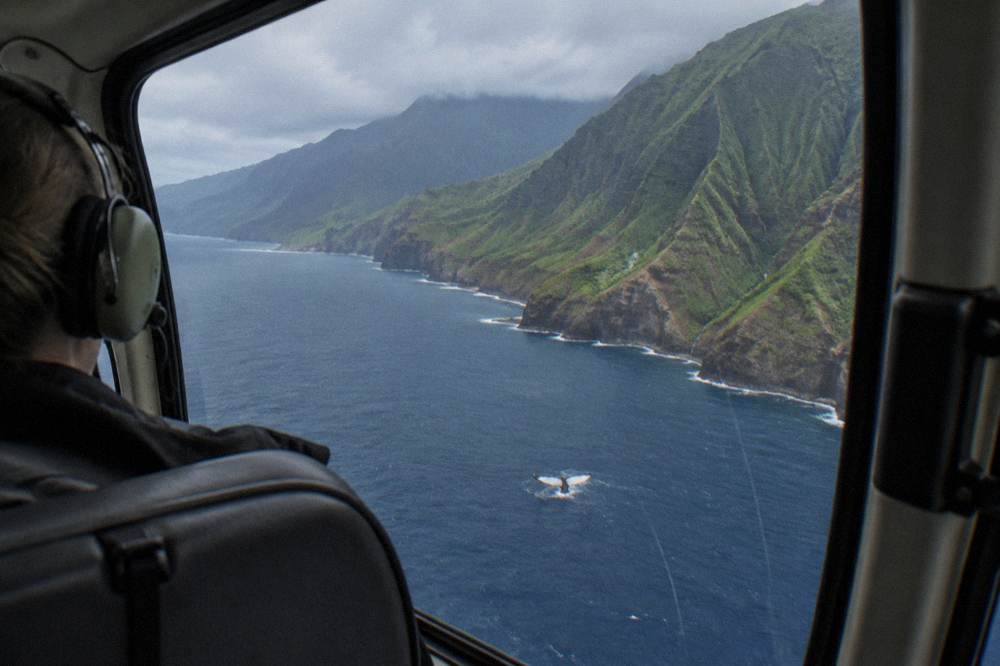
One thing timing cannot fix is ground access. Recent months have brought closures and restrictions to several Kauai state parks, roads and lookouts, and the situation evolves; the Division of State Parks publishes current notices on its Important Park Notices page. Flights are bookable for future dates, and an aerial tour is precisely the format that keeps working when trails do not, but confirm the operator's current schedule when you book and reconfirm near your date.
Does The Time Of Day Change What You See?
Yes, in three specific ways: waterfalls flow and show best in the morning light before cloud caps them, the Na Pali cliffs read differently under an eastern versus a western sun, and whale sightings from the air are a winter bonus that morning light favors. The core sights are the same at any hour; the emphasis and the visibility shift with the sky.
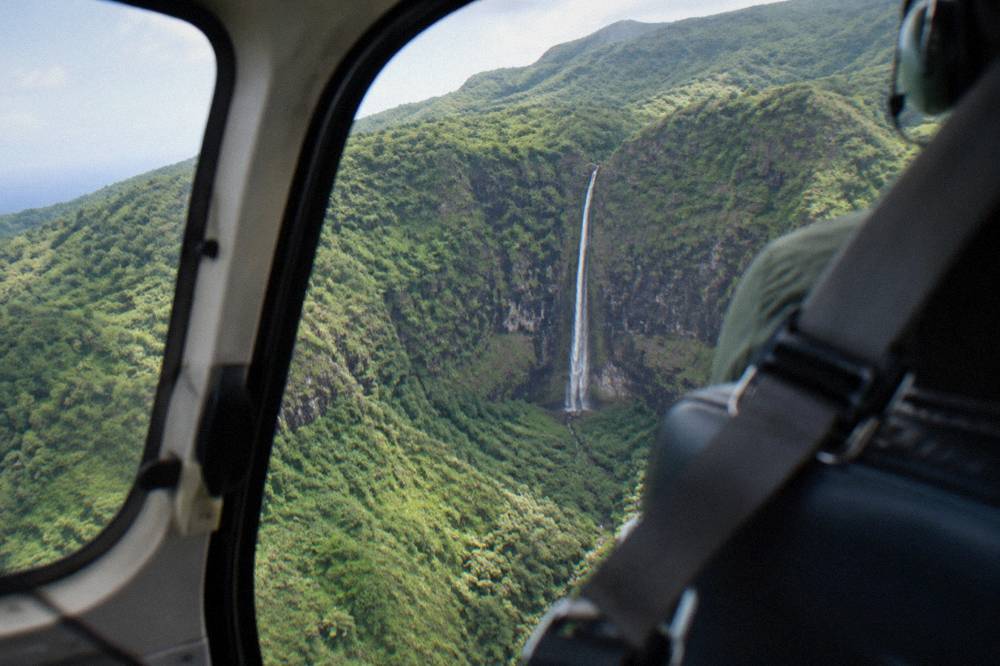
The waterfall argument is the strongest. Kauai's flights are sold substantially on the sheer number of waterfalls the wet interior throws down its cliffs, especially after rain. In the morning those falls are often sunlit and the walls above them open; by afternoon the same falls can sit under their own cloud. Safari Helicopters' Waterfall Safari Helicopter, about 55 minutes, rated 4.8 from 963 reviews and priced from $335.70 per person, is built entirely around this scenery, which is why its morning departures carry the most demand.
The coast is the equalizer. The Na Pali cliffs, the Hanalei valley and the canyon do not disappear in the afternoon, and in warm western light the canyon in particular can look better than it did at 8 a.m. Travelers who fly twice, some do, often pick a morning waterfall flight and an afternoon canyon-emphasis flight on separate days for exactly this reason.
Dolphins, turtles and, in season, whales appear from the air at any hour, and no listing promises a sighting. What the morning adds is glare-free water, which makes spotting animals near the surface easier for the crew. Treat any marine life as a bonus, never the reason for the booking.
Booking Strategy: How To Pick Your Departure Window
Book the earliest morning slot you can realistically make if waterfalls and the interior are your priority or anyone worries about turbulence. Book an early-afternoon slot if you want canyon light, a relaxed morning or the only seats left. In both cases, pick a day early in your trip, so a weather cancellation can be recovered, and check free-cancellation terms before you pay.
The early-in-trip rule is the one experienced Kauai travelers repeat most. Weather cancels flights on every island, every month, and a cancellation on day one of seven is an inconvenience, while a cancellation on day seven is a loss. Anchor the flight near the start of your dates and keep one backup morning open later in the week.
| Your priority | Recommended window | Why |
|---|---|---|
| Maximum waterfalls | First departure | Falls sunlit before cloud build-up |
| Smoothest cabin | First or second flight | Overnight air is settled |
| Canyon color and photos | Mid to late afternoon | Western light deepens the gorge |
| Whale season bonus | Morning, November to April | Calmer water is easier to read |
| Traveling with young kids | Late morning or early afternoon | Avoids a pre-dawn wake-up |
| Late booker, few seats | Take what fits | Any window beats no flight |
Price does not move much by hour. The listings on this site print the same fare for morning and afternoon departures of the same product, so the choice is about sky and schedule, not money. What does vary is cancellation flexibility: many Kauai flight listings offer free cancellation up to a cutoff, and reading that line before booking is worth the thirty seconds. If the tour price has you thinking through the rest of your island budget, the Oahu vs Kauai comparison lays out what beaches, hiking, and food cost on each island.
If you are still weighing formats before you weigh hours, the site's doors-off versus doors-on comparison covers who each suits, and the doors-off private flight below is the product most often chosen when the first-of-day slot matters most to the rider.
Which Slot Should You Actually Choose?
Choose the first or second morning departure if this is your one Kauai flight and you want the classic waterfall-and-crater experience, and choose early afternoon if you value warm light, an easy start or the seats that remain. Split the difference across two days only if your budget allows two flights, since no single hour gives you everything the island shows.
For a single booking, the quiet consensus of operators and repeat guests is morning-first. The Eco Adventure Helicopter by Blue Hawaiian, mentioned earlier, from $489 per person with a 4.8 rating across 2,065 reviews, is the archetype of that choice: a large-cabin, doors-on circle-island flight with many departure times, where taking the earliest one simply buys you better odds on the interior at no extra cost.
Whatever you choose, hold the plan loosely. Confirm the day before, arrive with time for the safety briefing, and if the sky disagrees with your booking, let the operator re-fly you. The island has more than one good hour in it.
These three flights are the ones this article compares throughout, and each has morning departures worth grabbing early.
Common Questions About Morning Or Afternoon Helicopter Flights In Kauai
Is It Better To Do A Helicopter Tour In Kauai In The Morning Or Afternoon?
Morning, for most travelers. Kauai's interior clouds and afternoon winds usually build through the day, so early flights more often get open ridge lines, sunlit waterfalls and smoother air. Afternoon flights still deliver the coast and canyon in warm light and suit relaxed schedules, but the odds favor an early departure.
Are Afternoon Helicopter Flights In Kauai More Likely To Be Canceled?
Weather can cancel a flight at any hour and no operator promises otherwise, but afternoon builds more cloud and wind over the island's high interior, which raises the chance of a reroute or delay. Booking early in your trip gives the operator room to re-fly you if the weather does not cooperate.
Which Time Of Day Is Best For Seeing Waterfalls From The Air?
The first departure of the day. The wet interior fills with cloud as the day warms, so early flights most often find the falls visible and lit. The Waterfall Safari Helicopter by Safari Helicopters, about 55 minutes and rated 4.8 from 963 reviews, centers its route on that scenery.
Is A Morning Or Afternoon Flight Better For Photos?
It depends on your subject. Morning light comes from the east and flatters the windward coast and waterfalls; late afternoon light rakes across Waimea Canyon from the west and deepens its color, which many photographers prefer for that specific landscape.
Does The Time Of Day Affect Helicopter Tour Prices In Kauai?
No. The listings on this site print the same fare across departure times for the same flight, so the choice is about weather odds and your schedule, not price. The Waterfall Safari Helicopter runs from $335.70 per person at any listed time of day.
How Early Should I Arrive For A Kauai Helicopter Flight?
Follow the operator's stated check-in time, which appears on the live listing, since weigh-in and a safety briefing happen before boarding. If you are staying far from Lihue, where most operators are based, an early-morning departure can mean leaving your hotel well before sunrise, which is one honest argument for a later slot.